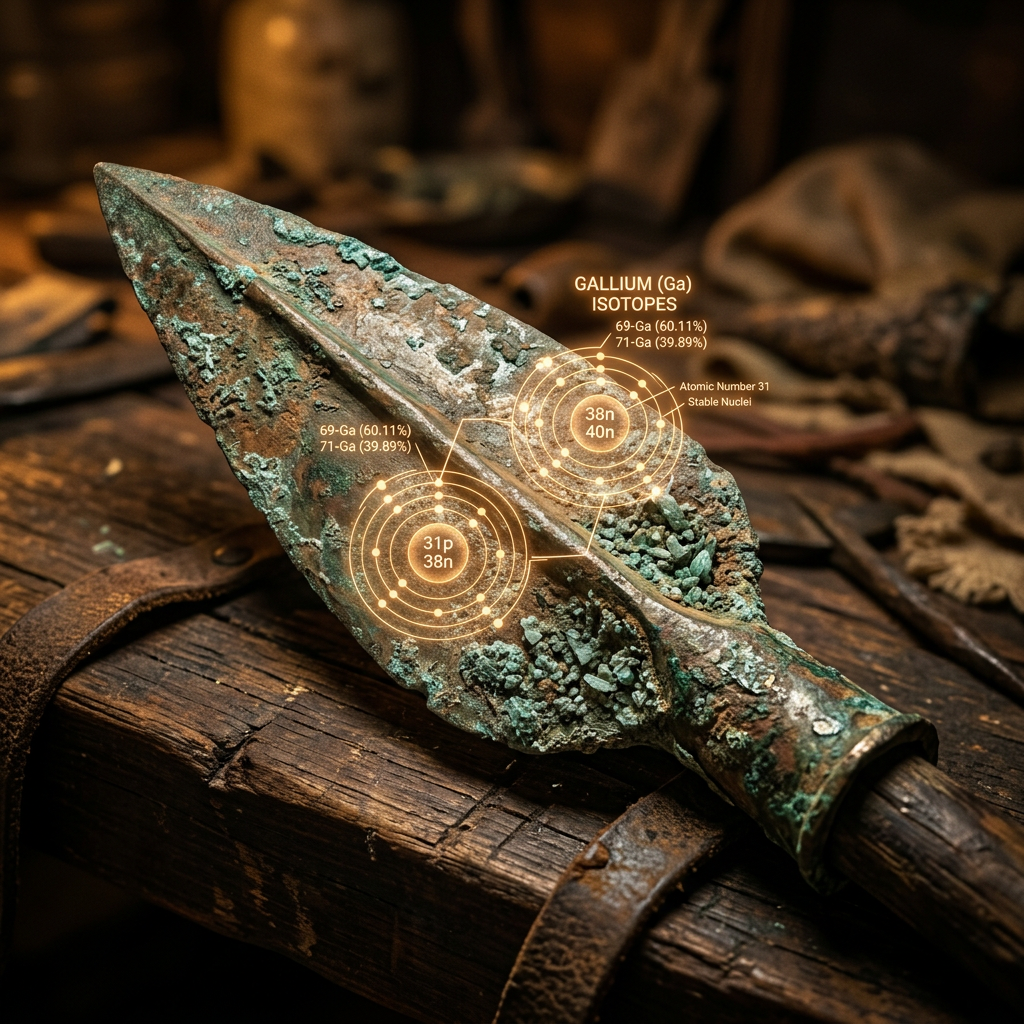
A new study in the Journal of Archaeological Science has introduced a revolutionary dating methodology using Gallium-69/71 isotopic fractionation to refine the chronology of ancient metalwork. By analyzing slag heaps in the central Zagros Mountains, researchers have successfully dated the transition to complex copper-tin alloying to 3400 BCE, nearly three centuries earlier than established estimates. This technique measures the subtle shifts in gallium isotopes that occur during high-temperature smelting, providing a more stable temporal signature than traditional radiocarbon dating of charcoal inclusions.
The findings provide critical evidence for the early emergence of specialized metallurgical guilds in the Iranian Plateau. The research demonstrates that ancient smiths were capable of achieving precise furnace temperatures to control the viscosity of the melt, a prerequisite for the production of high-durability tools and weapons. This isotopic fingerprinting also allowed the team to trace the movement of ores from the Altai Mountains, confirming a vast, trans-continental trade network that supported the early urban centers of Mesopotamia.