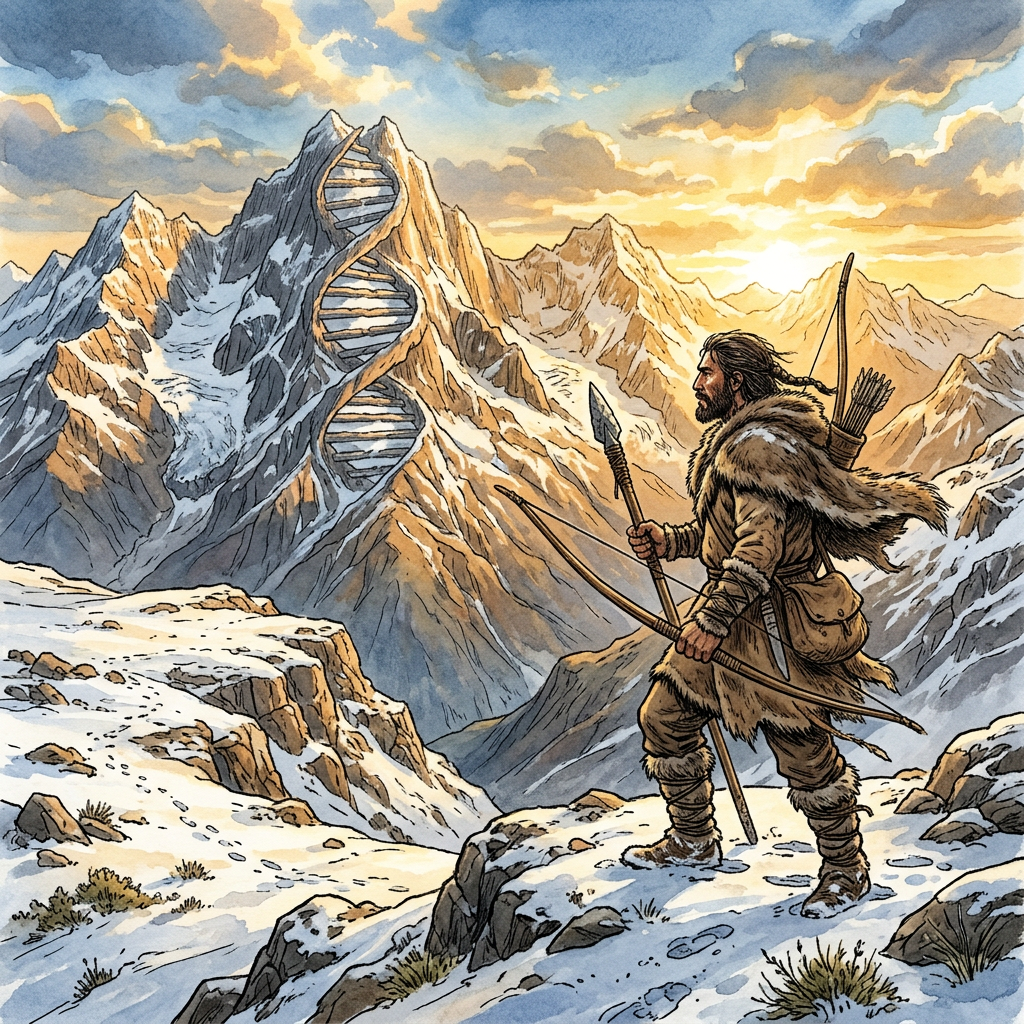
A new paleogenomic study featured in Nature Anthropological Research has mapped the genetic profile of some of the earliest human inhabitants of the Patagonian Plateau. Analyzing the remains of an individual dated to 12,500 years ago, the team identified a unique suite of genetic markers associated with metabolic efficiency in extreme high-altitude and cold-arid environments.
The findings indicate that these early hunter-gatherers developed specialized adaptations to cope with low oxygen levels and high ultraviolet radiation within only a few generations of arriving in the region. Specifically, the researchers noted selection in genes related to nitric oxide regulation and lipid metabolism, which would have been critical for surviving the harsh Pleistocene-Holocene transition in the southern Andes.
This genomic data challenges the 'slow adaptation' model of South American colonization, suggesting instead that Paleo-American lineages possessed significant genetic plasticity. The study provides a crucial baseline for understanding how ancient populations successfully settled the most challenging ecological niches of the New World.