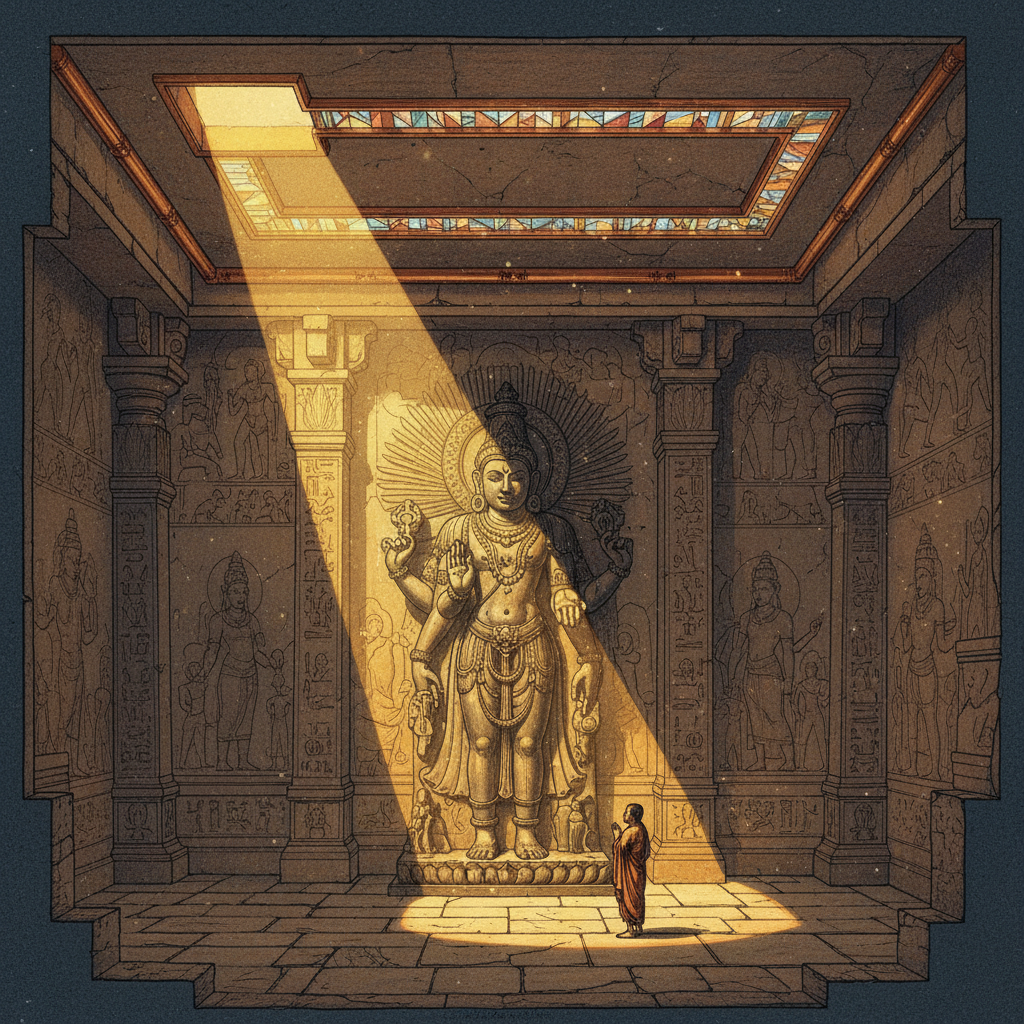
Conservationists working at a remote 11th-century Chauhan dynasty temple in Rajasthan’s Aravalli range have discovered a series of hidden mercury-lined solar siphons. These intricate channels, built into the upper masonry of the temple, were designed to reflect and intensify sunlight into the central sanctum using the reflective properties of liquid mercury contained within glass-like conduits.
This discovery confirms local legends of "eternal daylight shrines" that remained illuminated without oil lamps during the day. The restoration project, led by the state archaeological department, is meticulously documenting these advanced optical systems which demonstrate the sophisticated engineering capabilities of medieval Indian temple architects. Future plans include a controlled demonstration of the lighting effect using modern non-toxic reflective materials to preserve the original visual experience.