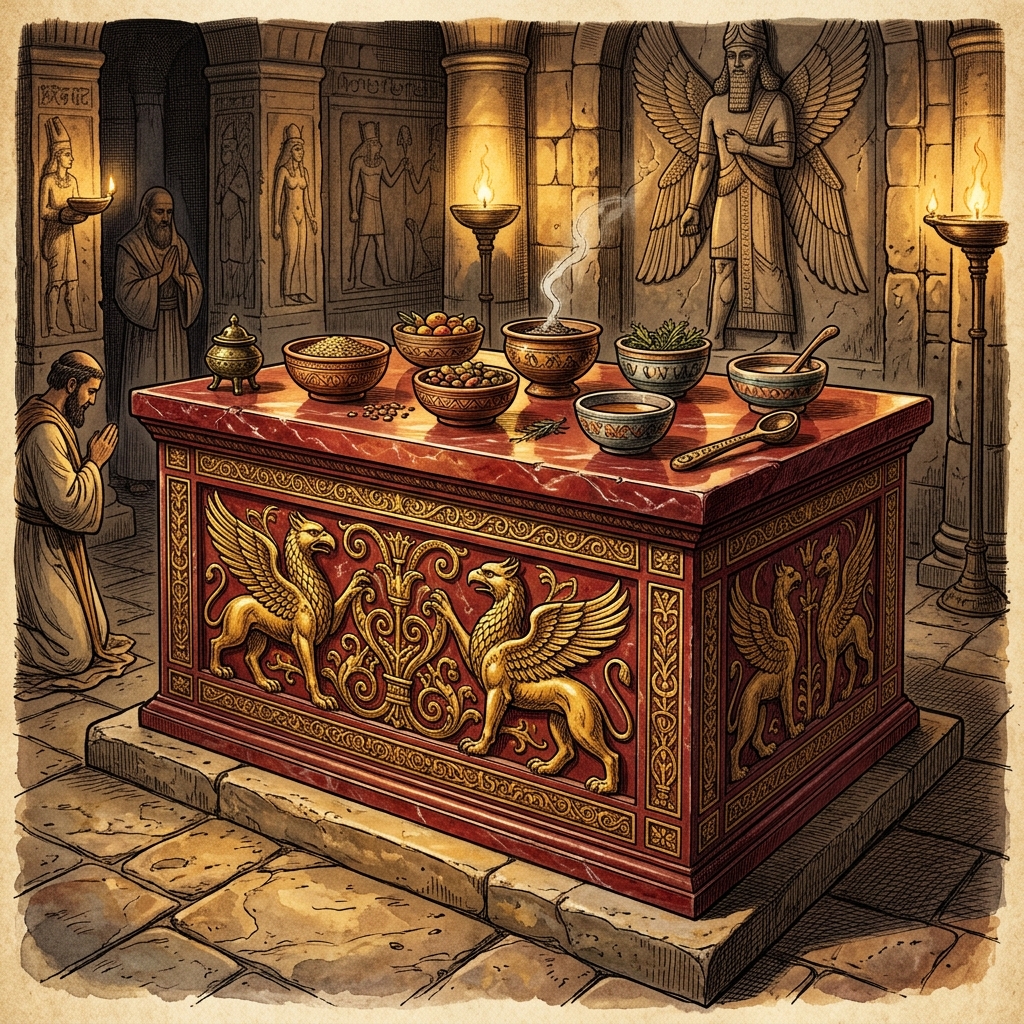
In a major breakthrough for Eurasian archaeology, a 2,400-year-old structure known as the Temple of the Jasper Griffin has been unearthed in the remote steppes of the Scythian heartland. The temple is unique for its use of polished red jasper in the construction of its central ritual platforms, which are heavily decorated with gold-inlaid griffin figures and floral motifs characteristic of Scythian animal-style art.
The excavation team discovered several intact altars that still contained the remains of aromatic resins and charred herbs, providing rare physical evidence of Scythian religious rituals. The presence of Greek-influenced pottery alongside local metalwork suggests the temple was a hub of cultural syncretism along the northern trade routes. This discovery is expected to redefine our understanding of the sedentary religious centers maintained by traditionally nomadic Scythian tribes.