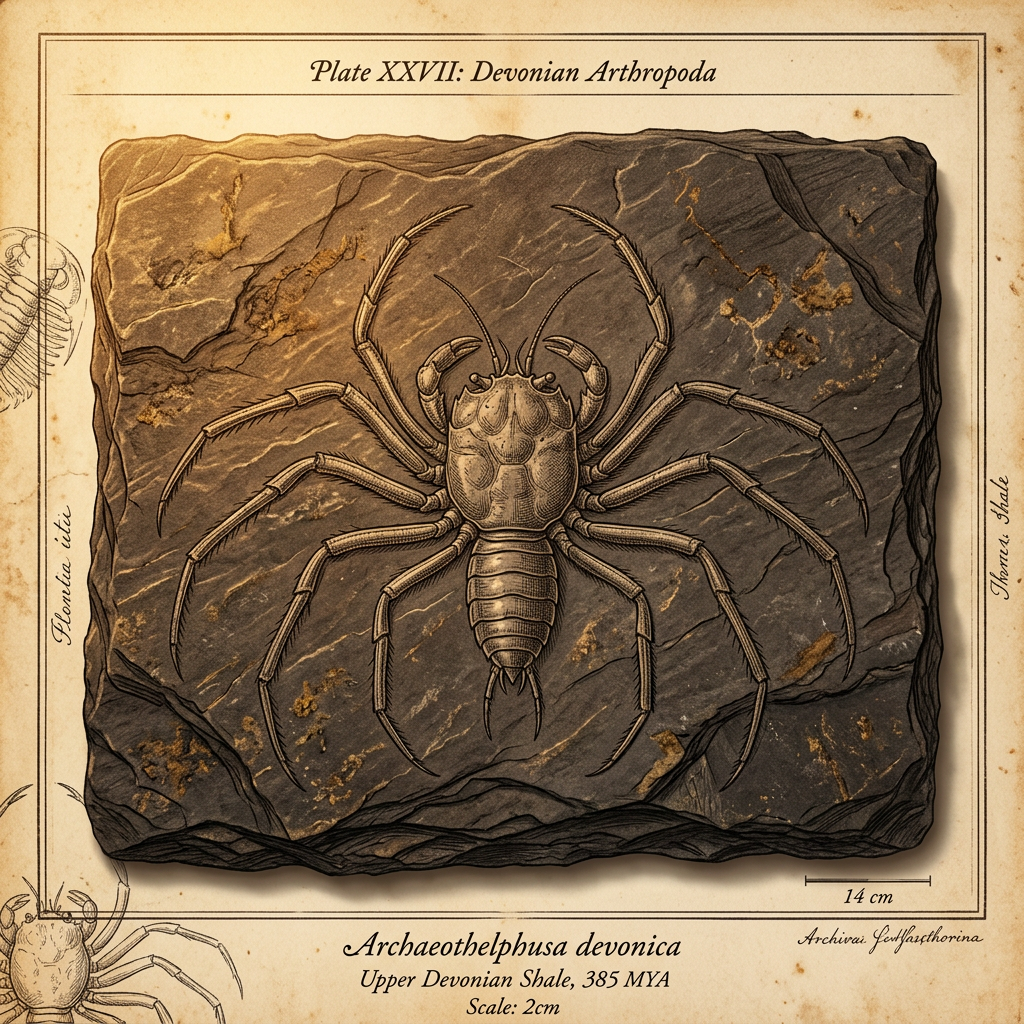
Paleontologists in the Prague Basin have unveiled a stunningly preserved pycnogonid (sea spider) fossil dating back to the Devonian period. Measuring nearly 30 centimeters in width, this specimen is the largest and most complete sea spider ever recovered from the Paleozoic era.
Using advanced micro-CT scanning, researchers were able to visualize the specimen's intact respiratory tubules and a primitive circulatory system. This find offers a "missing link" in the evolution of arthropods, showing how these marine creatures adapted to the high-oxygen environments of the ancient oceans.