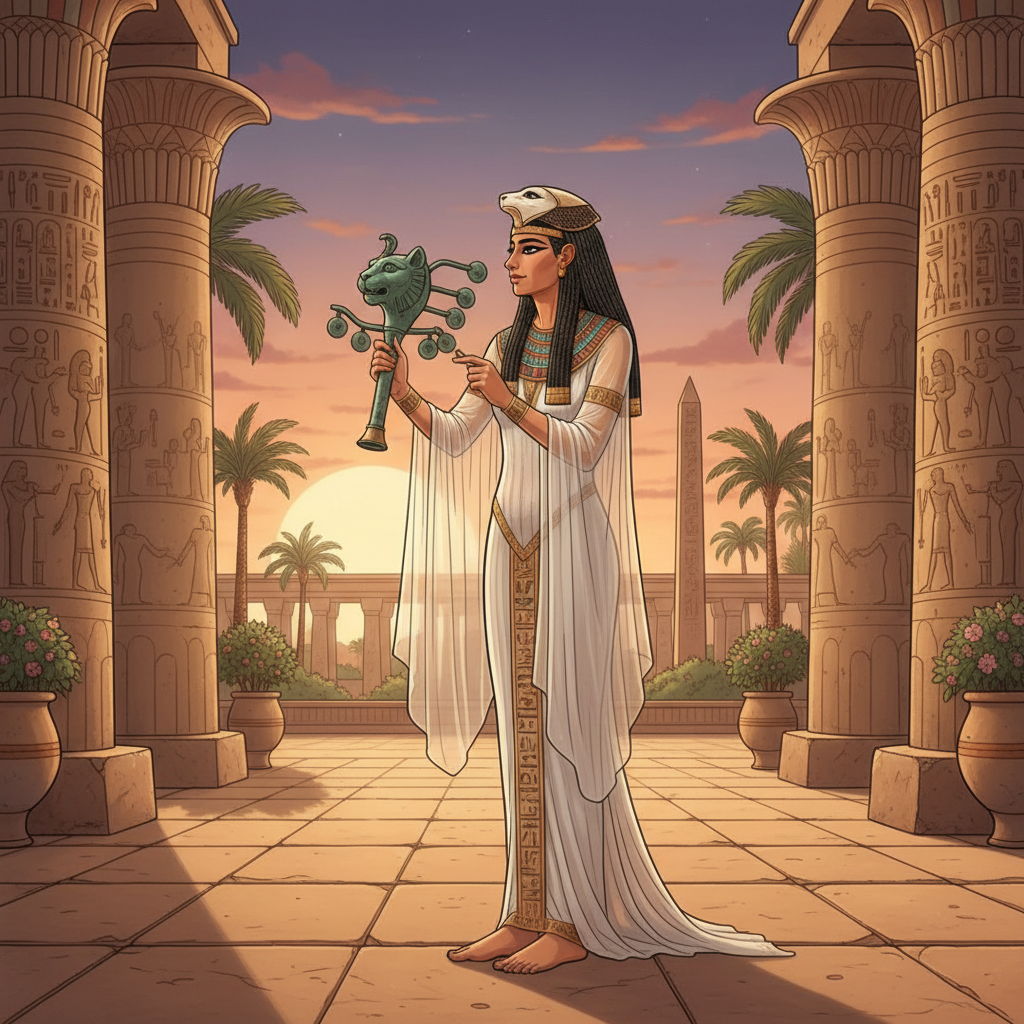
A joint Egyptian-German mission in the ancient city of Bubastis (Tell Basta) has unearthed three remarkably well-preserved copper sistrums—ceremonial musical instruments—adorned with the face of the goddess Bastet. The discovery, made within a newly identified festival hall, provides critical data on the acoustic elements of the 'Procession of the Cat,' one of the most celebrated and boisterous festivals in the Late Period of ancient Egypt.
Analysis of the sistrums reveals they were designed with specific metal alloys to produce a high-pitched, metallic shiver intended to mimic the rustling of papyrus reeds in the Nile breeze. This sound was central to the ritual 'pacification' of the goddess during the annual spring festivities. The find highlights the sensory complexity of ancient Egyptian heritage, where music and movement were engineered to create a shared communal ecstasy during seasonal transitions.