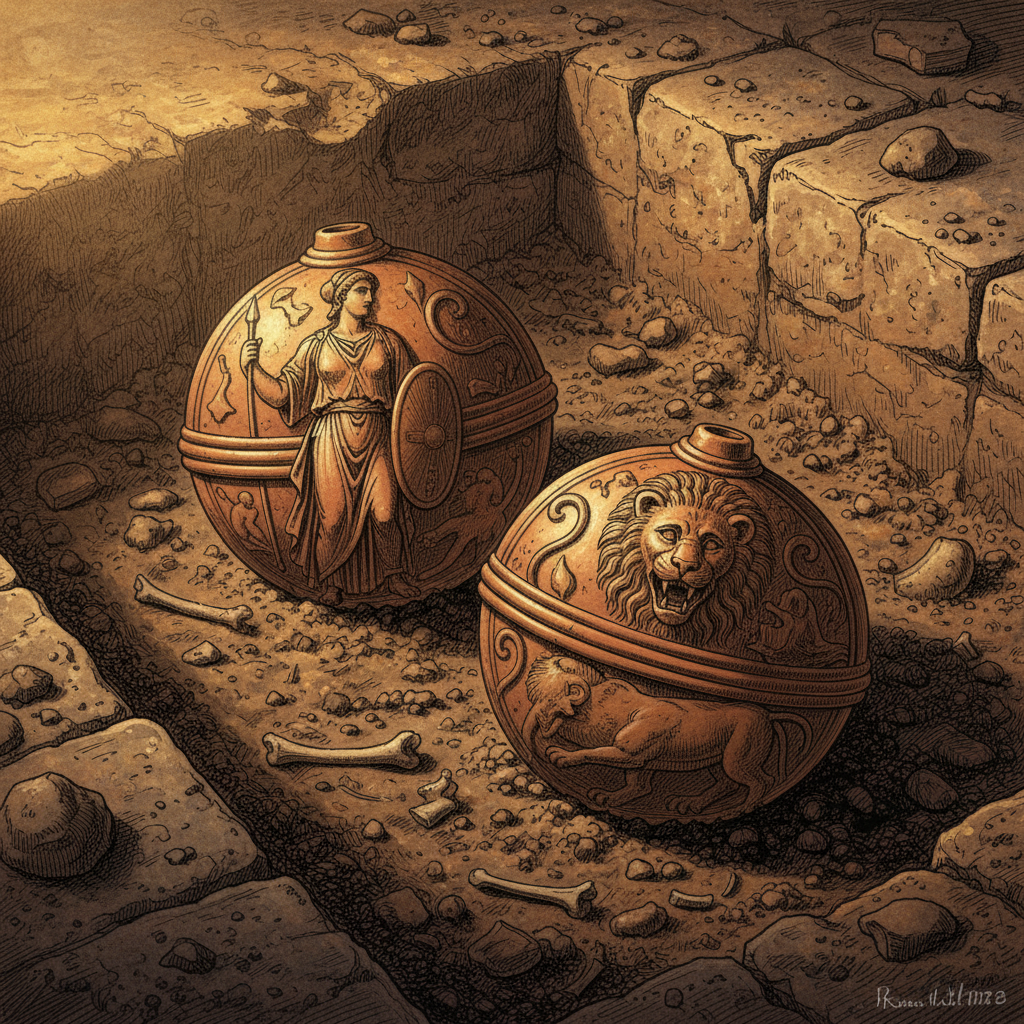
During a routine infrastructure project in Rome's historic Subura district, excavators stumbled upon a ceremonial pit containing several terracotta 'rattles' or crotala, specifically linked to the Megalesia festival held in April. The rattles are decorated with the visage of the Great Mother, Cybele, and her consort Attis, and were once used by the Galli (priests) during the frenetic street processions that characterized this Roman spring festival.
The artifacts were found alongside the remains of pine branches and almond shells, corroborating ancient texts that describe the botanical offerings used during the Megalesian rites. Archaeologists note that the concentration of these instruments in a residential district suggests that the festival's celebrations were not confined to the Palatine Hill but permeated the daily lives of Rome's urban working class, blending state religion with neighborhood carnival traditions.