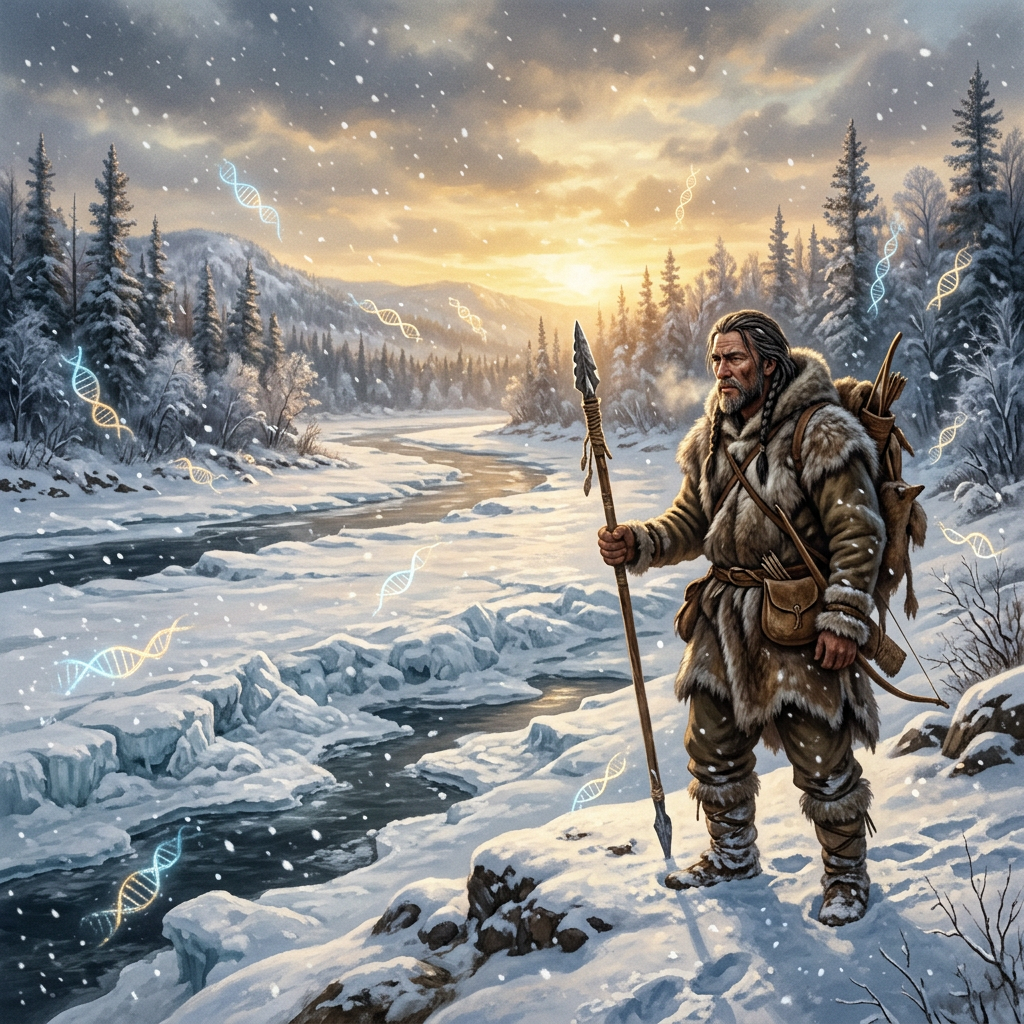
A groundbreaking paleogenomic study published in Nature Genetics has sequenced the genome of a late Pleistocene individual discovered in the Amur River region of the Russian Far East. The research identifies a previously unknown genetic group, dubbed the 'Amur-Ghost' lineage, which appears to have diverged from East Asian populations approximately 25,000 years ago before contributing significantly to the ancestry of early Indigenous Americans.
Using high-resolution sequencing, the international team of researchers demonstrated that this ghost population provided a unique genetic pulse to the Paleo-Siberian groups that eventually crossed the Bering Land Bridge. This discovery fills a critical gap in our understanding of the migratory pathways that shaped the first human settlements in the Americas, suggesting a more complex web of interaction between Pleistocene tribes than previously modeled.