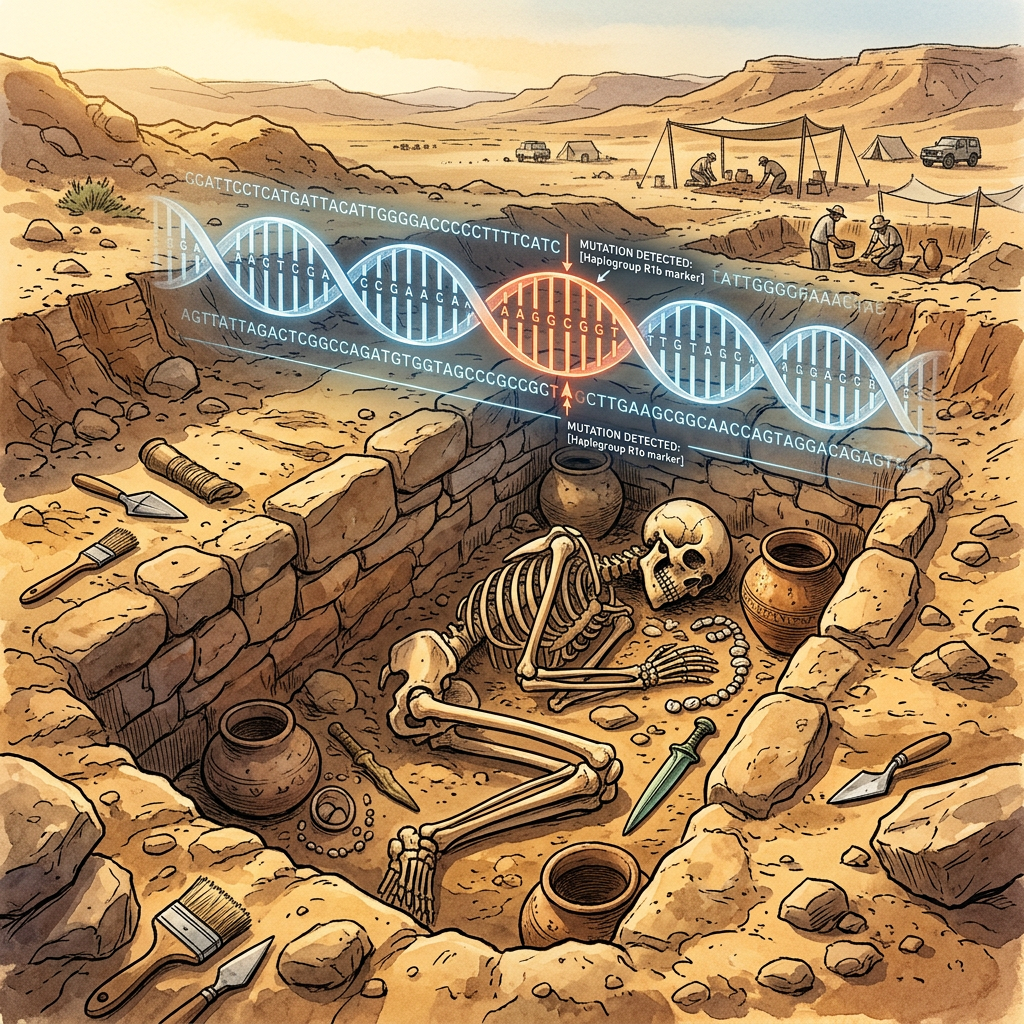
A large-scale genomic study published in Science Advances has analyzed the remains of 4,000-year-old individuals from the Tarim Basin, uncovering a unique instance of rapid genetic adaptation. The analysis revealed a specific mutation in the AS3MT gene, which enhances the body's ability to metabolize and excrete arsenic, a toxic element commonly found in the region's groundwater and mineral deposits.
The presence of this genetic marker indicates that these Bronze Age populations were deeply embedded in mining and metallurgical activities, likely refining copper and gold ores that released high levels of arsenic. This finding provides the first biological evidence of how ancient industrial environments drove human evolution, selecting for survival traits in communities that pioneered the early metallurgical trade routes of Central Asia.