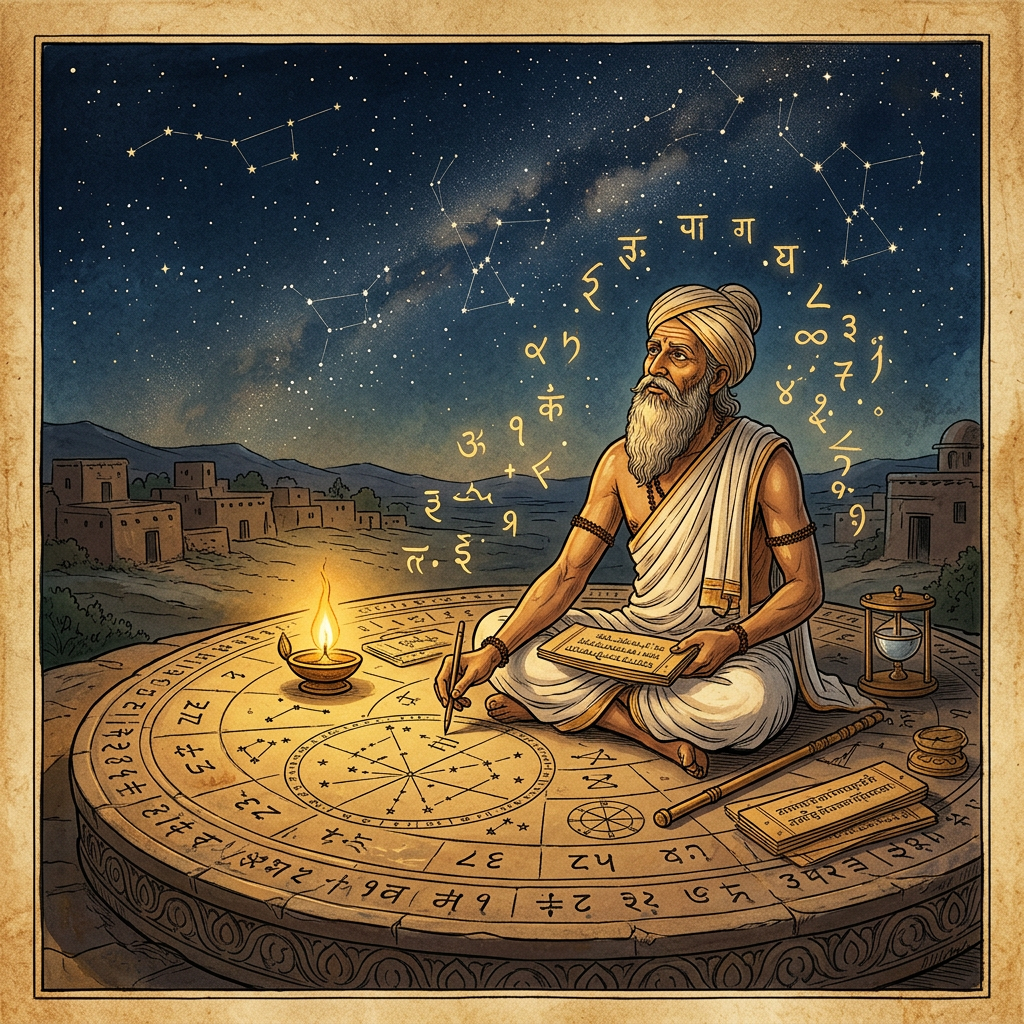
Researchers from the Journal of Indian Astronomy have completed a comprehensive computational audit of the mathematical tables found in the Vedanga Jyotisha, one of the earliest known Indian astronomical treatises. The study reveals that ancient Vedic astronomers utilized a sophisticated system of iterative corrections to account for the precession of the equinoxes with an accuracy that predates similar Hellenistic findings by nearly a millennium.
By applying modern statistical modeling to the verses, the team identified a hidden recursive structure used to calibrate the positions of the nakshatras (lunar mansions) over long durations. This suggests that the observers of the 2nd millennium BCE had developed a stable observational framework capable of distinguishing between tropical and sidereal years, demonstrating a level of mathematical maturity far beyond what was previously attributed to the era.