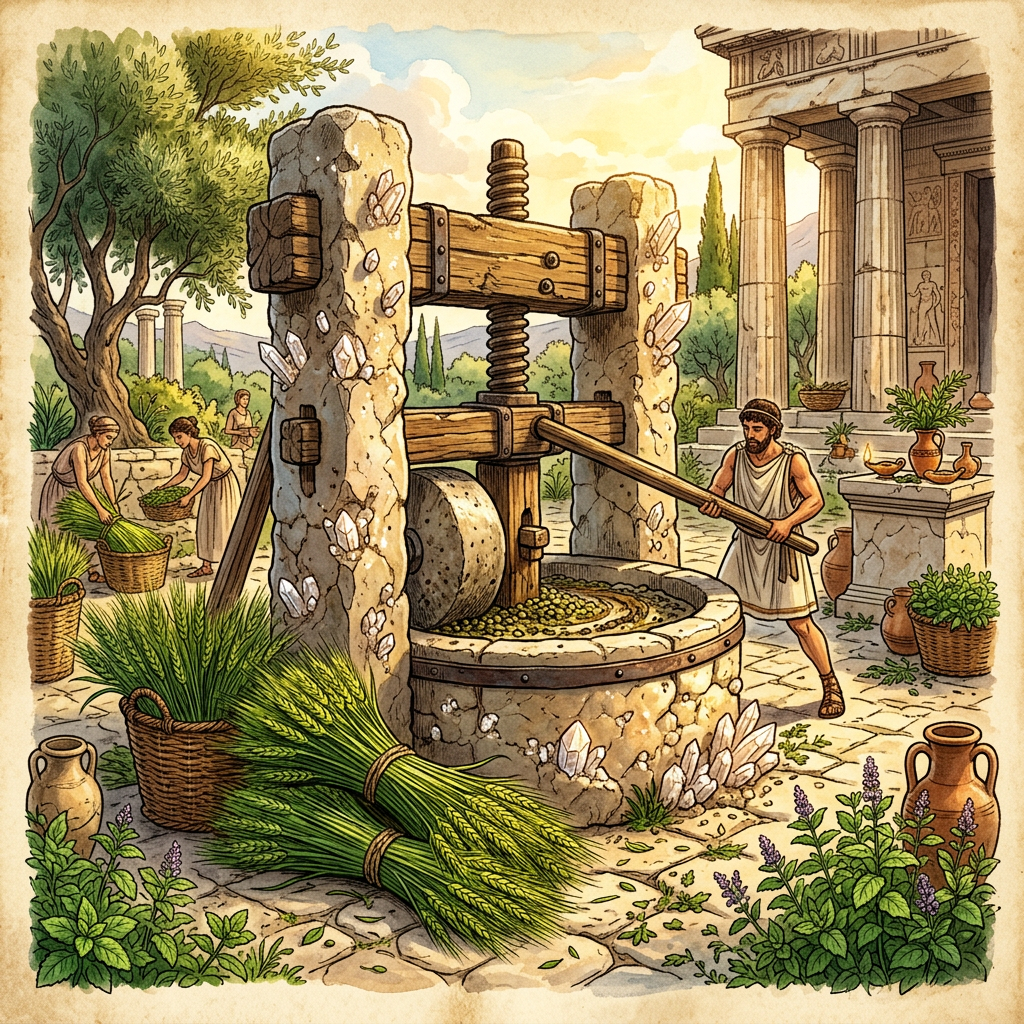
Archaeologists excavating a rural sanctuary in the southern Peloponnese have uncovered a series of ceremonial stone presses decorated with embedded quartz crystals. These tools, used to extract liquids from malted barley, provide the first physical evidence of the specific preparations for the 'Festival of the Grain-Moon,' a previously obscure Mycenaean celebration marking the transition from the spring planting to the first summer growth.
Chemical analysis of the porous stone reveals traces of fermented barley mixed with wild mint and honey, suggesting a ritualistic beverage consumed during the multi-day event. The alignment of the pressing floor with the rising moon during the April equinox suggests that the festival was a precisely timed celestial event intended to ensure the fertility of the crops through lunar propitiation.