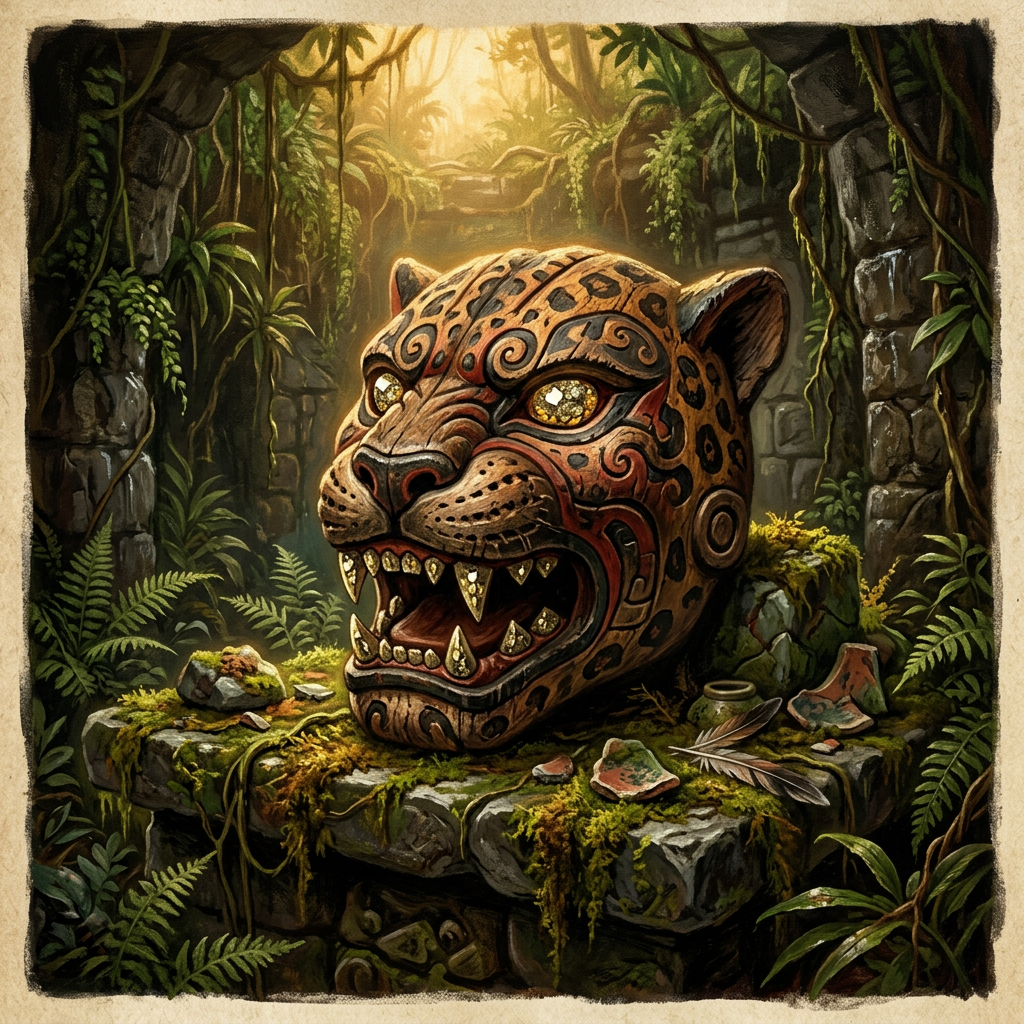
Deep within the ruins of a secondary Maya center in the Petén Basin, archaeologists have recovered three ceremonial masks crafted from hardwood and studded with shimmering iron pyrite. These masks, shaped to resemble the features of a jaguar, were found in a subterranean chamber aligned with the cardinal direction of the prevailing spring winds, linking them to the 'Storm-Blowing' festivals of the Late Classic period.
The pyrite served a dual purpose: its reflective surface mirrored the flashes of lightning during the early rainy season, while the jaguar imagery represented the power of the earth to summon moisture from the sky. These festivals were essential for the Maya agricultural calendar, involving ritual dances intended to 'blow' the clouds toward the parched fields following the long winter dry spell.