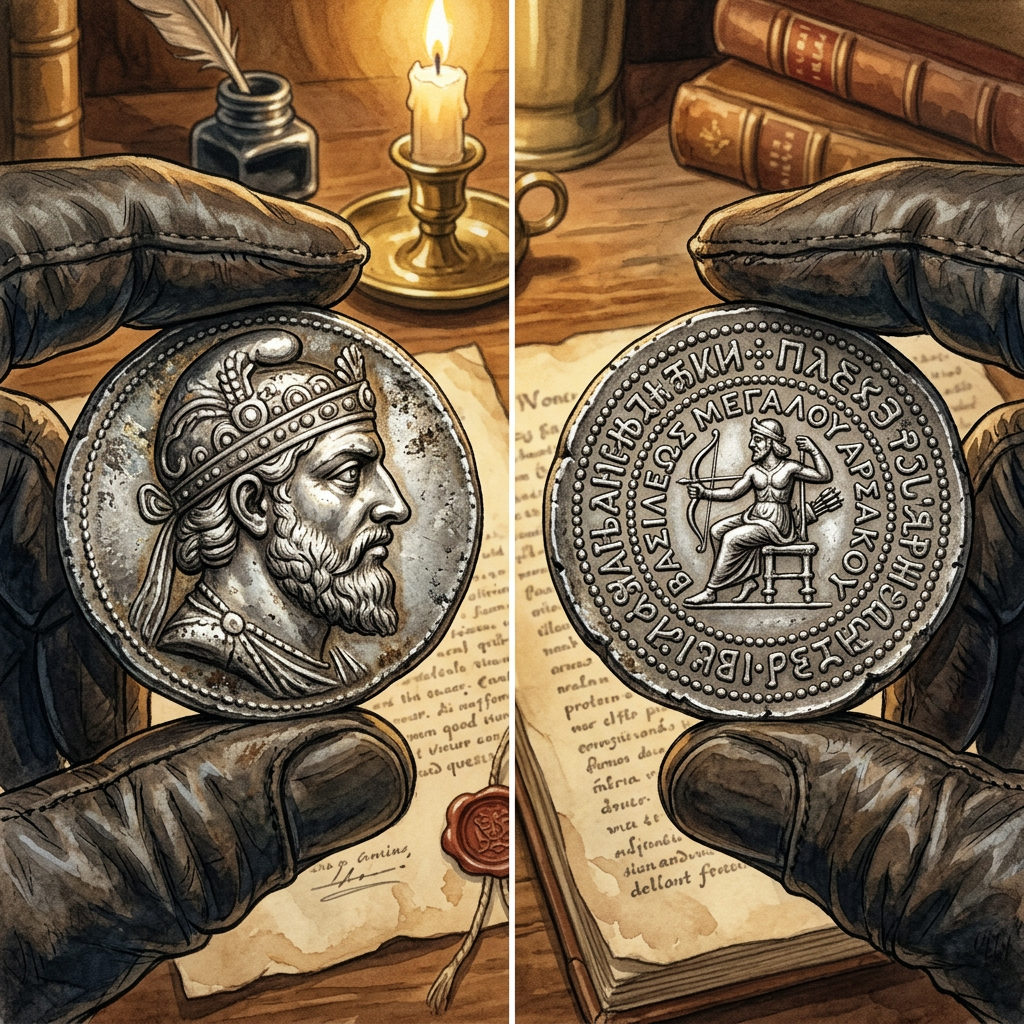
A new numismatic study of silver drachms found in the ancient city of Sagala (modern-day Sialkot) has identified a unique philosophical synthesis between Greek Euthymia and Vedic Santosha. The coins, minted under a local Indo-Greek governor, feature inscriptions that translate to the Philosophy of Proportional Virtue. This doctrine emphasizes that ethical behavior must be scaled to the individual's social capacity and the specific context of their actions, a radical departure from the absolute moralities of the time.
Research suggests that this philosophy was the result of intense dialogues between Peripatetic scholars and local Nyaya logicians. The inscriptions suggest that 'Just Proportion' is the highest truth, governing both the distribution of wealth and the regulation of personal desires. This discovery highlights the sophisticated intellectual melting pot of the Gandhara region, where Western and Eastern wisdom traditions formed entirely new ethical systems.