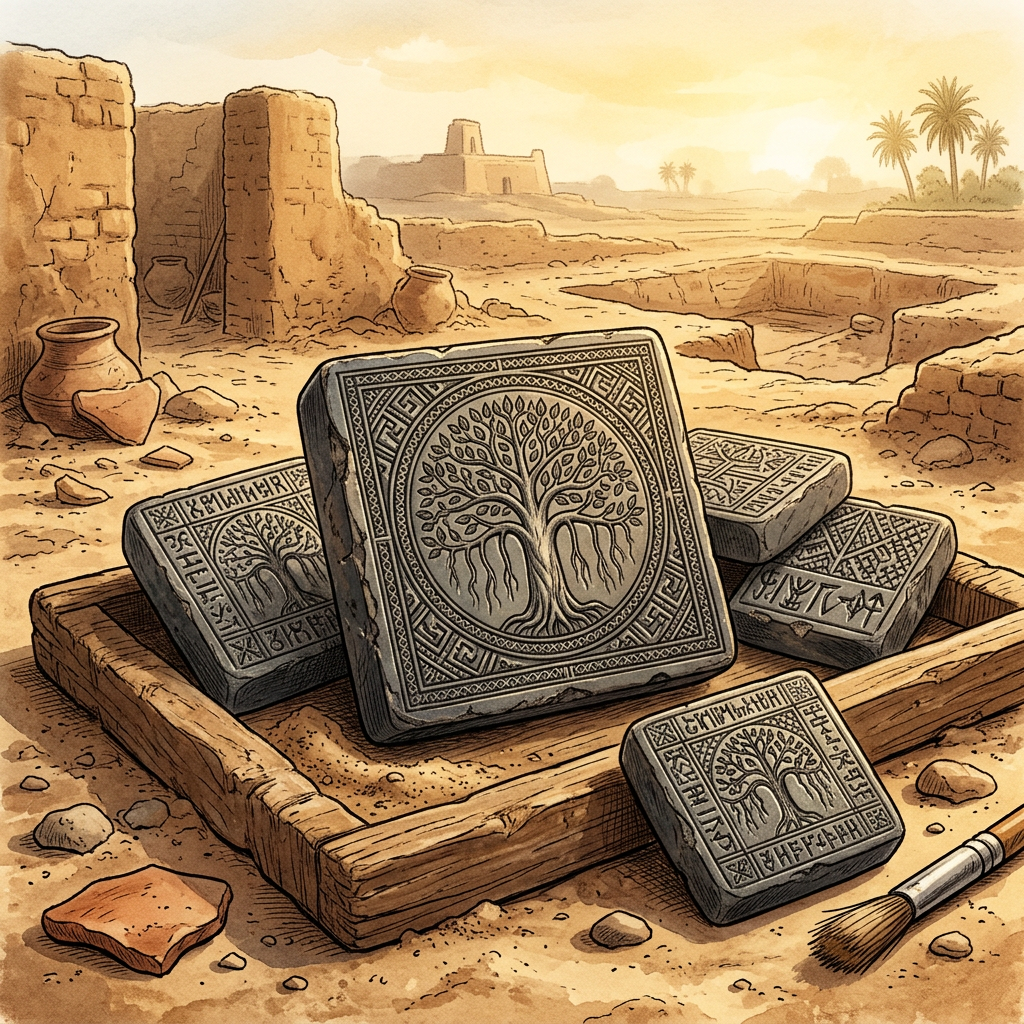
Recent excavations at the Rakhigarhi site have yielded a new cache of seals that suggest a sophisticated philosophical framework regarding the cyclical nature of life and resources. Researchers at the Archaeological Survey of India (ASI) have identified specific iconographic sequences that differ from standard trade markings, pointing toward a conceptualization of 'Samsara-Rta' or a proto-Vedic understanding of natural cycles.
The findings indicate that the Harappan civilization may have possessed a developed ethical system centered on the preservation of balance between human consumption and the environment. This "Philosophy of Cyclic Regeneration" is seen in the symbolic representation of water, seeds, and celestial bodies arranged in specific geometric patterns that scholars believe served as mnemonic devices for community leaders.