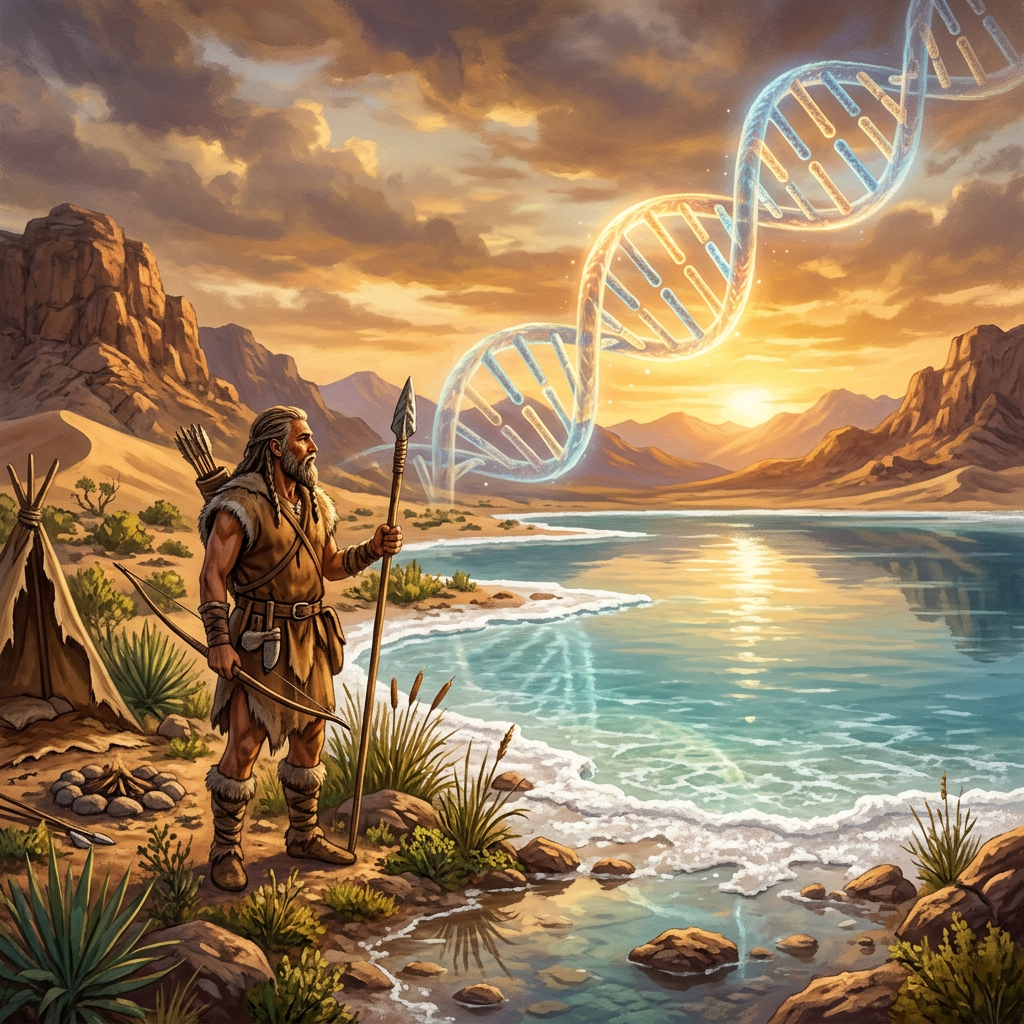
A breakthrough paleogenomic study published in Nature Genetics has revealed the first known genetic adaptation to extreme alkaline environments in North American hunter-gatherers. Researchers sequenced the DNA of human remains dating back to 11,500 years ago found in the Lahontan Basin of Nevada, identifying specific mutations in the SLC4A gene family that likely allowed these populations to process high-pH water and alkaline-rich flora found in the terminal lake systems of the Pleistocene-Holocene transition.
The study indicates that this unique lineage diverged from other Paleo-American groups shortly after the initial peopling of the continent. This genetic signature, which provides enhanced resilience to metabolic acidosis and renal stress, suggests that early settlers did not merely migrate through harsh landscapes but rapidly evolved specialized physiological traits to exploit niche ecological zones previously thought to be inhospitable for permanent habitation.