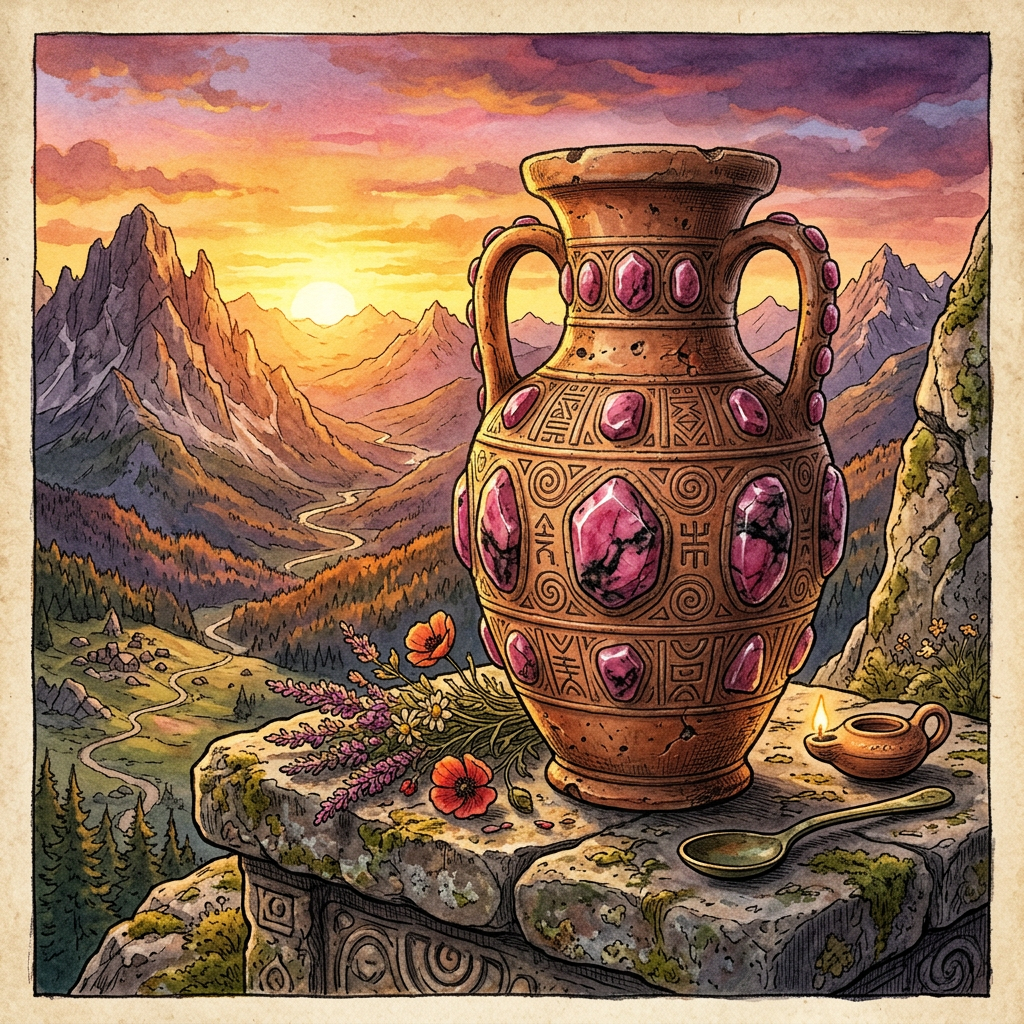
Archaeologists excavating a high-altitude sanctuary in the Hindu Kush mountains have unearthed a cache of ceremonial vases inlaid with rhodonite, a pink-to-red silicate mineral. These rare vessels, dating to approximately 1200 BC, are believed to have played a central role in the "Festival of the Amethyst-Twilight," a seasonal rite celebrating the transition from late summer to autumn. Chemical analysis of the porous ceramic revealed traces of a fermented beverage made from high-altitude pomegranates and wild mountain honey.
The excavation site features several circular stone altars aligned with the position of the sun during the autumnal equinox. Researchers suggest that the rhodonite inlays were chosen to catch the specific hues of the mountain sunset, creating a shimmering effect during the evening libations. This discovery marks the first evidence of a complex, structured festival culture in this remote region during the late Bronze Age, highlighting the sophisticated spiritual life of ancient mountain communities.