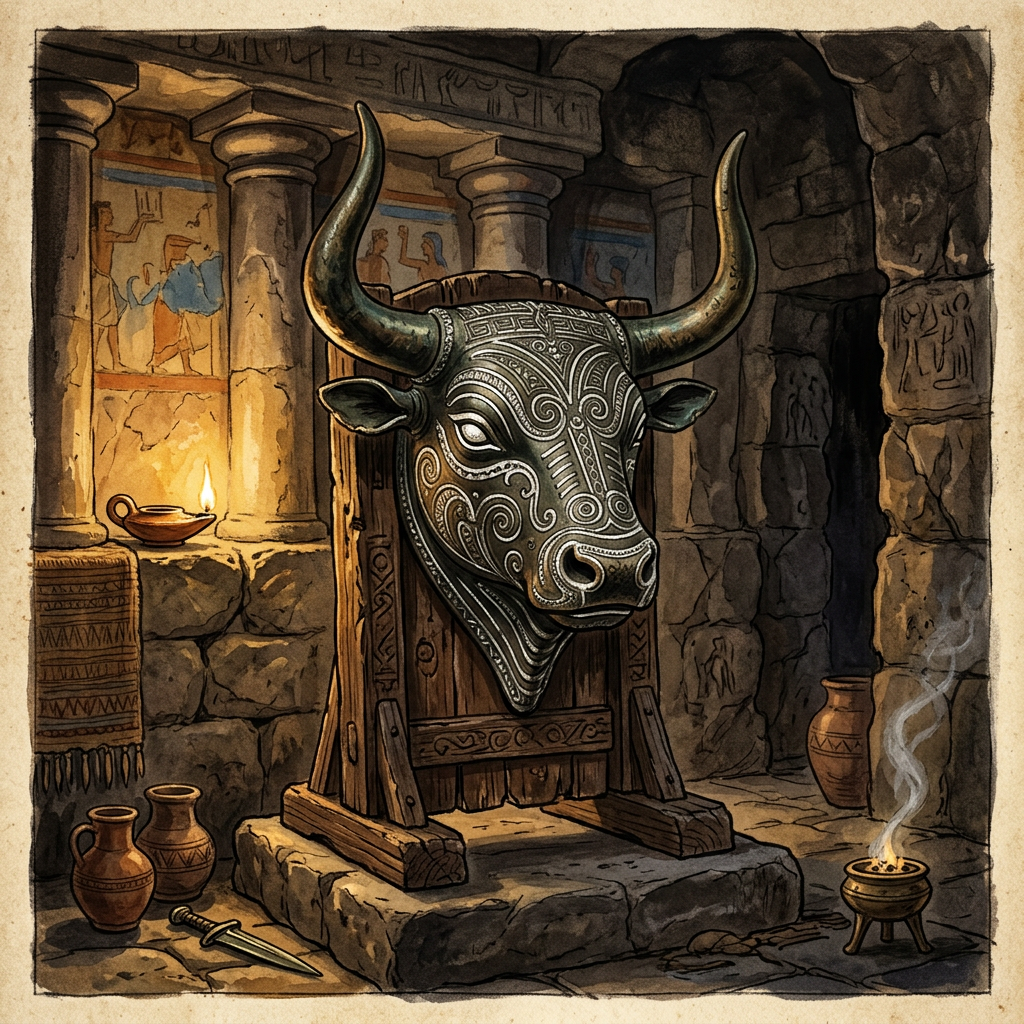
A recent excavation within a Nuragic "meeting hut" in central Sardinia has led to the discovery of three bronze bull-masks featuring inscriptions in powdered magnesite. These artifacts provide unprecedented insight into the "Rite of the High-Pasture Horns," a communal festival that marked the annual movement of livestock to summer grazing lands. The masks appear to have been worn by ritual performers who led processions between villages, acting as intermediaries between the pastoralists and the divine spirits of the land.
The use of magnesite, a mineral known for its brilliant white color, served to highlight the geometric patterns etched into the bronze. This mineral was sourced from distant coastal deposits, indicating that the festival served as a significant point of regional economic and social exchange. The discovery challenges previous assumptions about the simplicity of Nuragic ritual life, suggesting a highly organized and technologically advanced festival tradition.