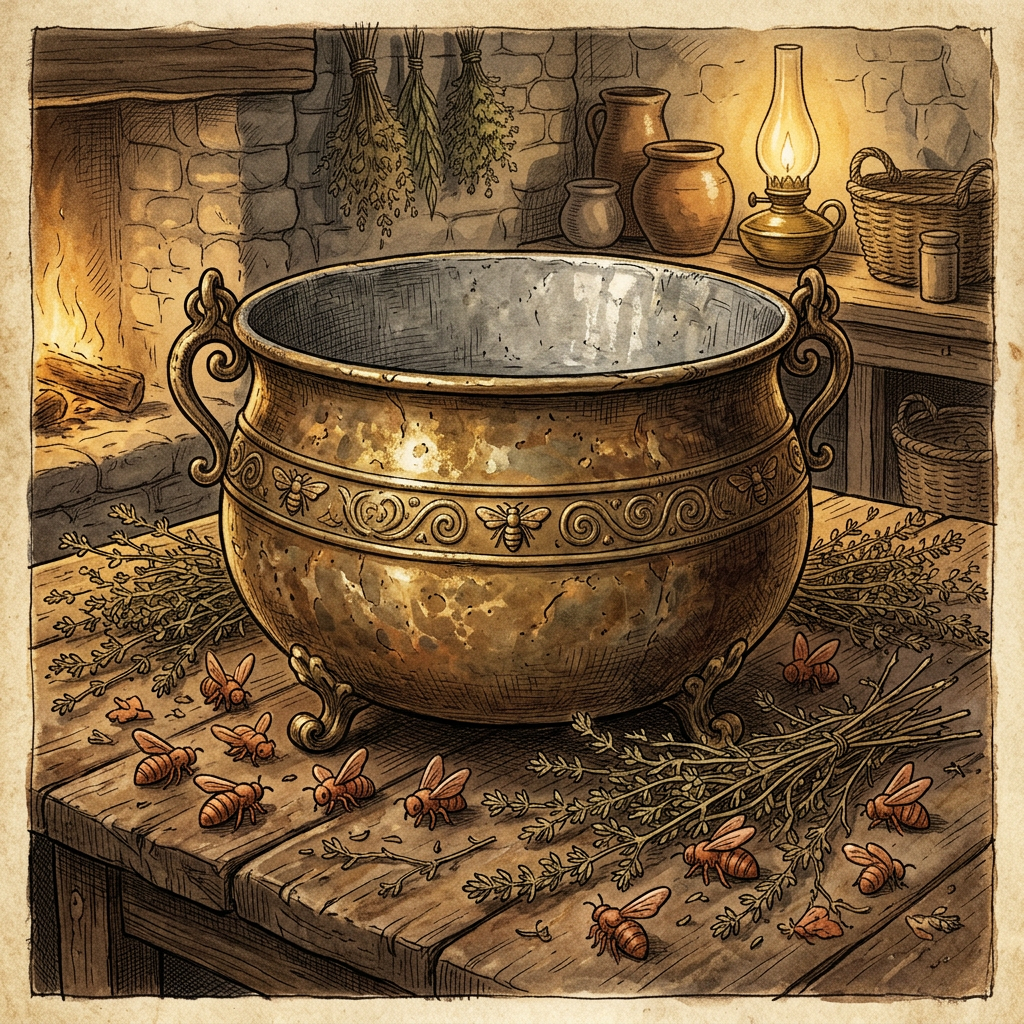
Excavations near the Mycenaean palace of Pylos have unearthed three massive bronze cauldrons lined with a thick layer of cassiterite (tin ore). Archaeologists have identified these as ceremonial vessels used during the "Ceremony of the Wild-Thyme Libation," a spring festival dedicated to the blessing of the year's honey and wine production. The tin lining served both a practical purpose in preventing copper leaching and a ritual purpose, as the bright silver-like finish was associated with the purity of spring water.
Inside the cauldrons, researchers found charred wild thyme sprigs and residues of a high-sugar mead. The vessels were found in a specialized chamber alongside small clay figurines of bees and goats, reinforcing the agricultural nature of the rite. This discovery illuminates the logistics of Mycenaean state-sponsored festivals, showing how high-value metals were utilized to create sacred environments for communal feasting.