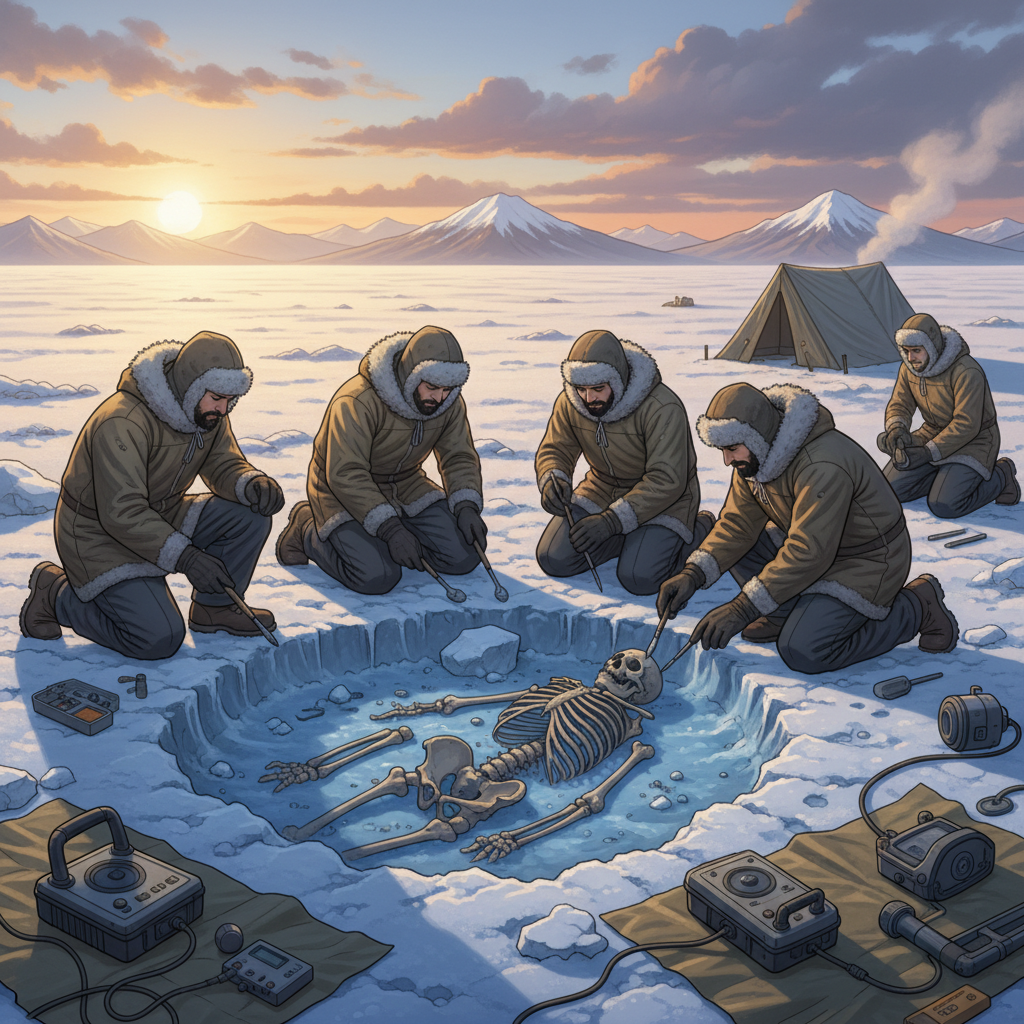
In a major breakthrough for paleogenomics, a study published in Science Advances has identified a distinct genetic lineage from 12,000-year-old remains found in the Kamchatka Peninsula. This newly discovered "Kamchatka-Ghost" population represents a previously unknown pulse of Late Pleistocene migration that significantly contributed to the ancestry of early maritime cultures along the northern Pacific Rim.
The genomic data reveals specialized epigenetic adaptations to high-iodine marine diets and extreme cold-stress resilience, which allowed these early foragers to survive the harsh sub-arctic environments of the far east. This research provides a critical missing link in our understanding of how human populations navigated the Beringian land bridge and settled the northeastern reaches of the Asian continent during the rapid transition into the Holocene epoch.