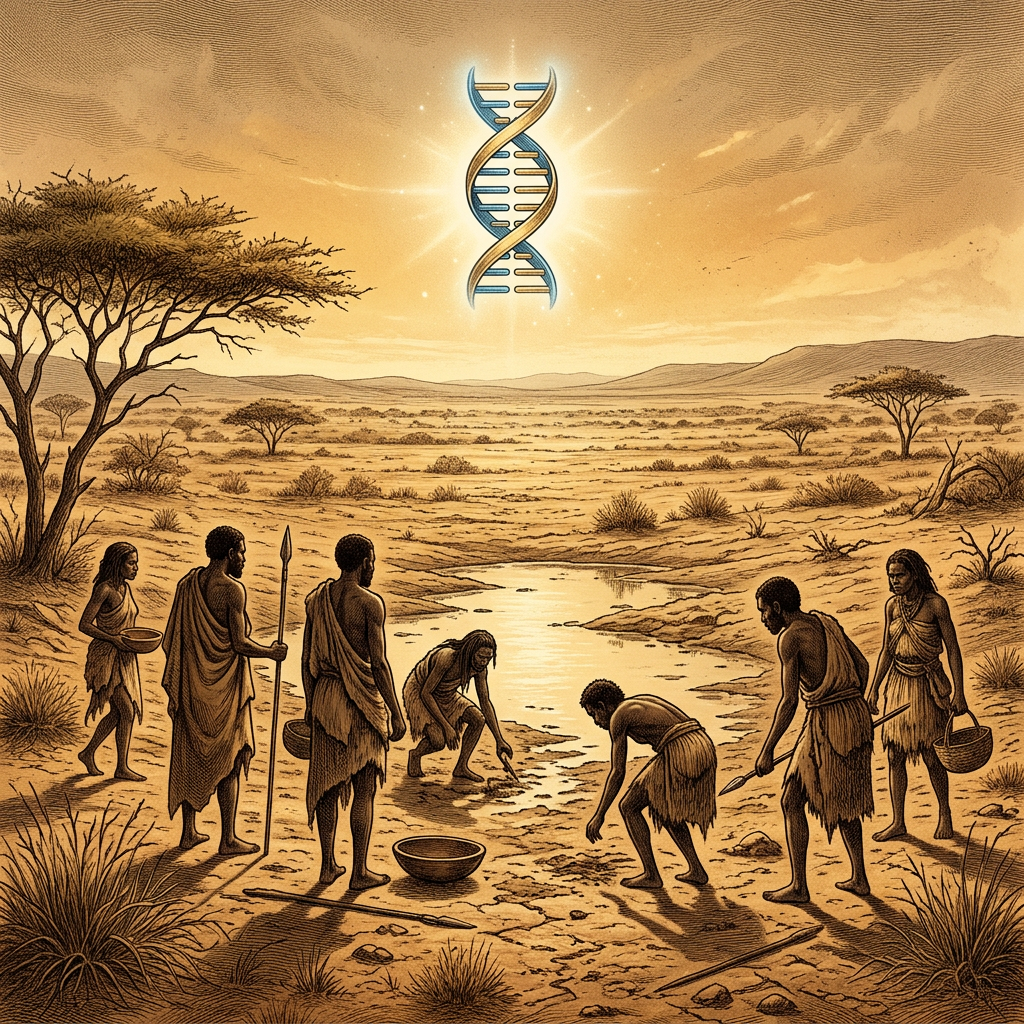
A comprehensive genomic study of 10,000-year-old remains found at the Trans-Saharan interface has revealed a significant population bottleneck that occurred approximately 9,500 years ago. Published in Cell Genomics, the research identifies a specific genetic signature of aridity-pulse resilience that emerged among the few survivors of a massive 500-year drought cycle in North Africa.
The analysis shows that this isolated population developed unique metabolic adaptations for water conservation and a heightened immune response to desert-borne pathogens. These findings reshape our understanding of early human migration in Africa, suggesting that environmental extremes acted as a genetic crucible, selecting for traits that would later enable the expansion of Saharan pastoralist societies across the continent.