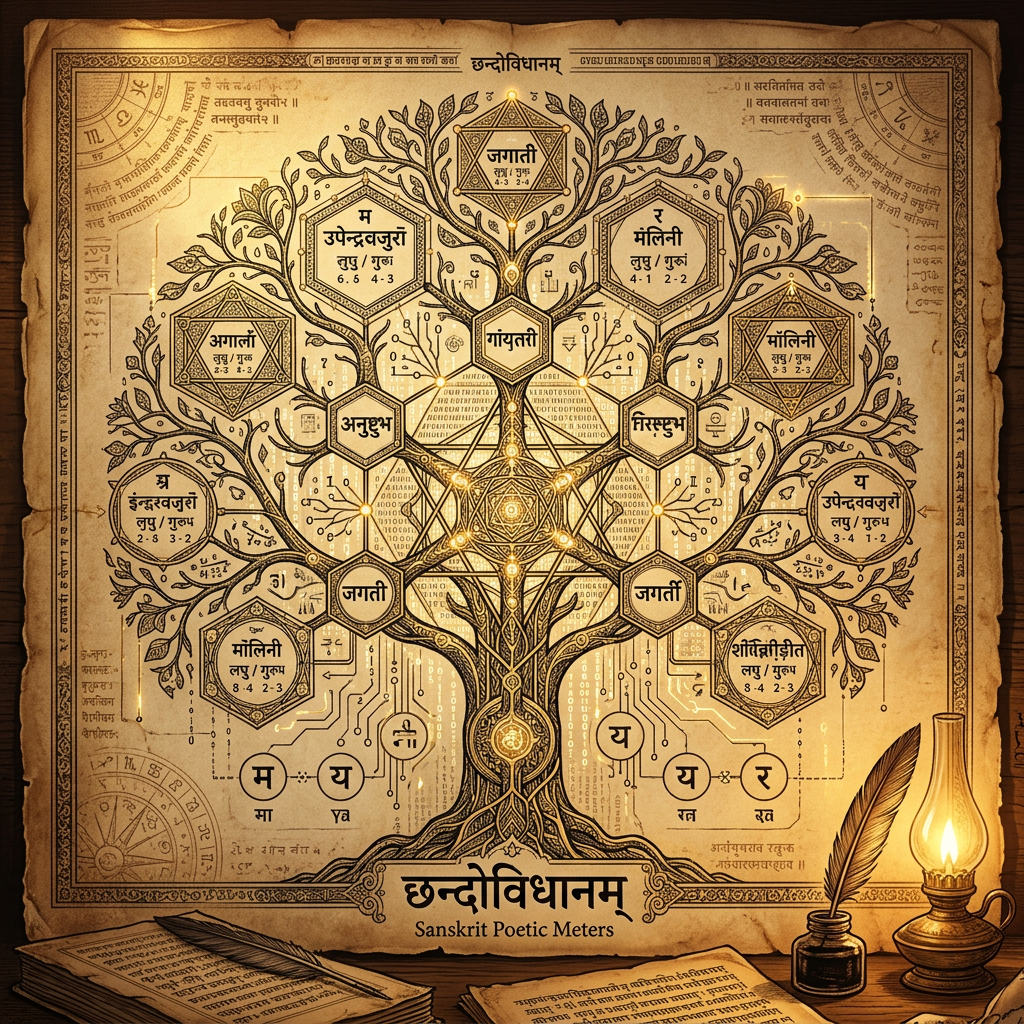
Academic researchers specializing in mathematical linguistics have identified the earliest known conceptualization of stochastic recursive logic in 11th-century Sanskrit treatises. The study, published in the Journal of Indian Mathematical History, analyzes the works of medieval Kashmiri scholars who developed mathematical models to calculate and predict the infinite permutations of complex poetic metres.
The findings suggest that ancient grammarians utilized finite-state automata principles to categorize the rhythmic structures of Sanskrit verse. This research bridges the gap between ancient linguistic theory and modern computational algorithms, revealing that the roots of formal language theory and non-linear logic were deeply embedded in the ritualistic and poetic traditions of medieval India.