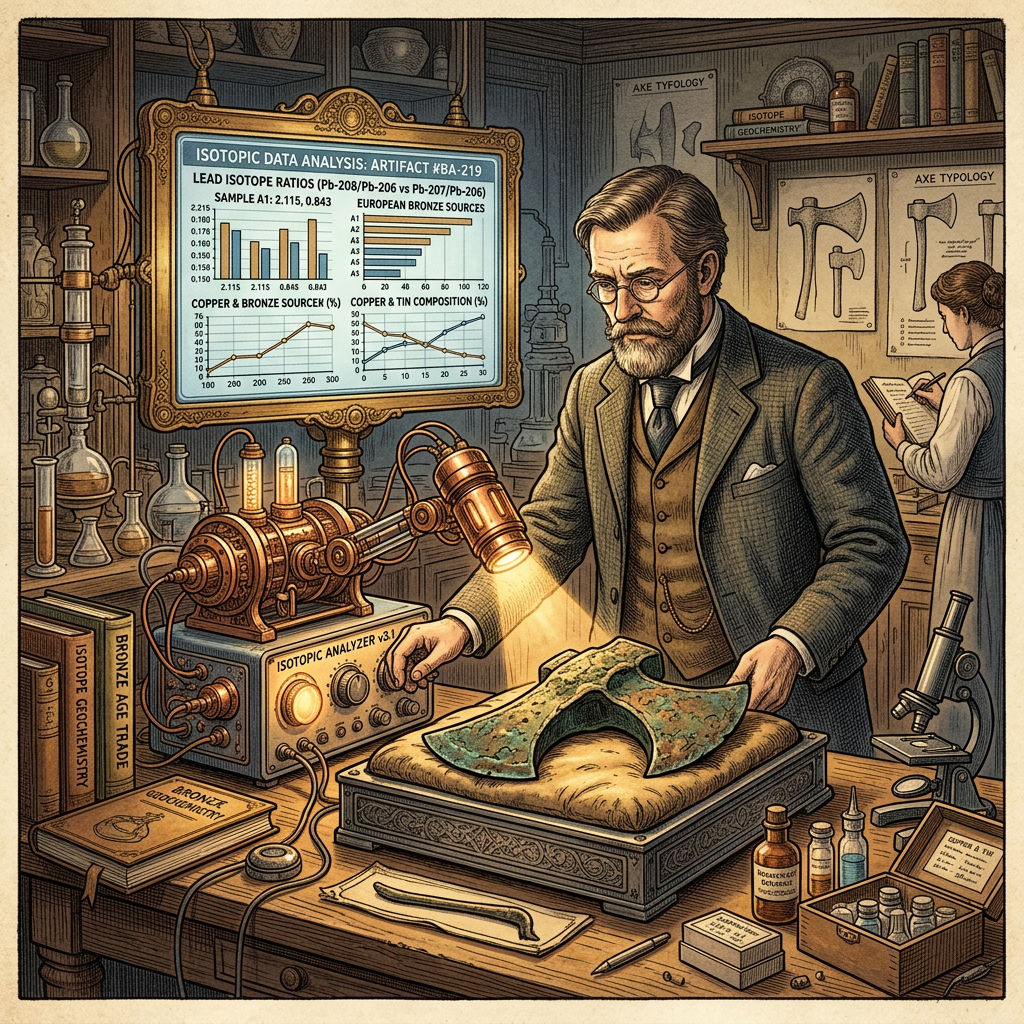
In a major development for archaeological dating, a team of researchers from the Global Archaeology Institute has pioneered the use of Indium-115 isotopic fractionation to date copper-based artifacts. When applied to ancient foundry sites in the Altai Mountains, this method has refined the date of the earliest tin-bronze alloys in the region to 2900 BCE. This methodology relies on the unique isotopic signature left during the smelting process, which acts as a chemical clock independent of external environmental factors.
The study indicates that the Altai region served as a critical node for metallurgical innovation, where miners developed sophisticated techniques for separating rare earth elements from copper ore. This refined chronology suggests that the spread of bronze technology across the Eurasian steppe was significantly faster and more localized than previously theorized. The use of Indium isotopes is now expected to become a standard tool for dating ancient metallic remains across Asia and Europe, offering a degree of precision that was previously unattainable.