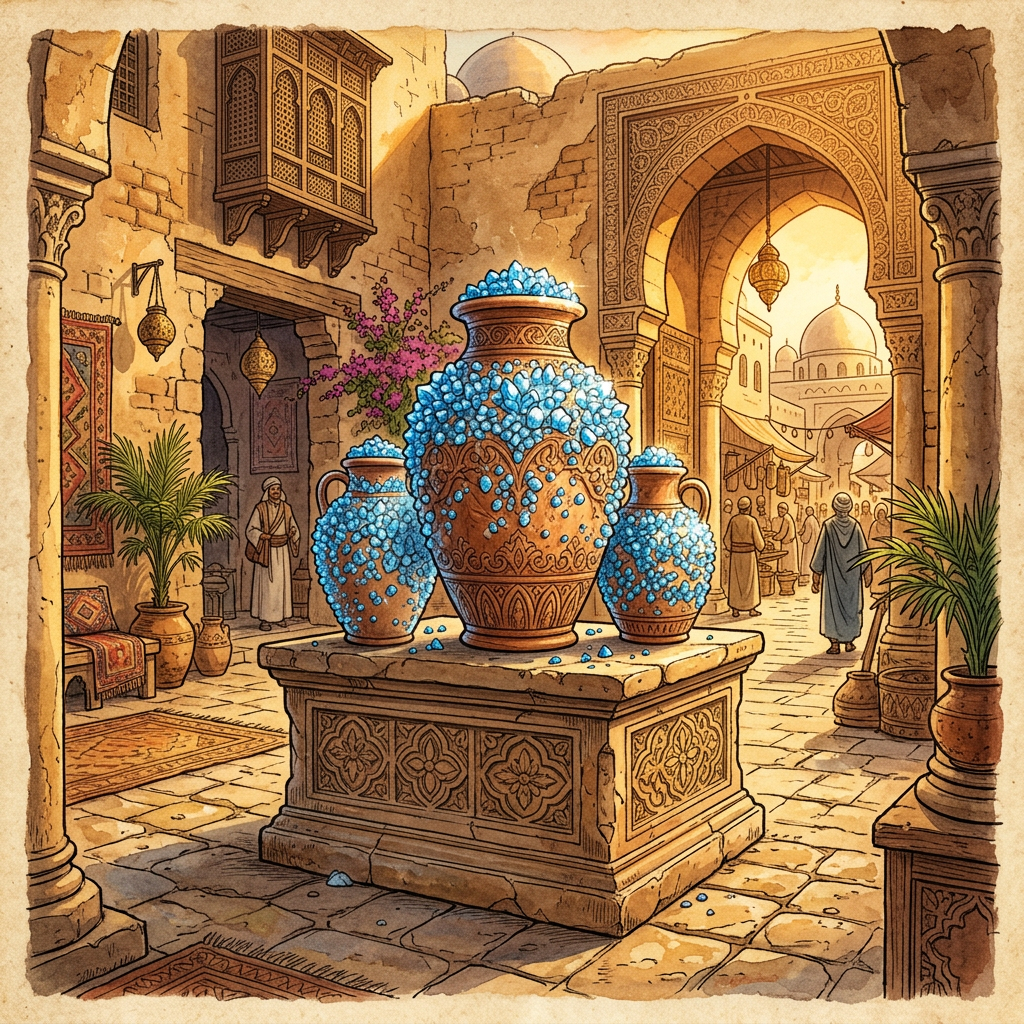
Excavations at the Temple of Bel in Ancient Palmyra have recovered several intact libation jars encrusted with celestine, a vibrant blue mineral. These vessels were found in a specialized drainage vault designed to channel liquid offerings toward a central altar. The jars date to the 2nd century AD, a period of immense cultural and religious flourishing for the Syrian caravan city.
The artifacts are attributed to the 'Festival of the Blue Noon,' a solar celebration held when the sun reached its zenith during the spring equinox. The celestine's blue hue was intended to mirror the clarity of the desert sky at midday. This find offers unprecedented detail into the sensory experience of Palmyrene liturgy, highlighting how rare minerals were used to enhance the visual spectacle of state-sponsored festivals.