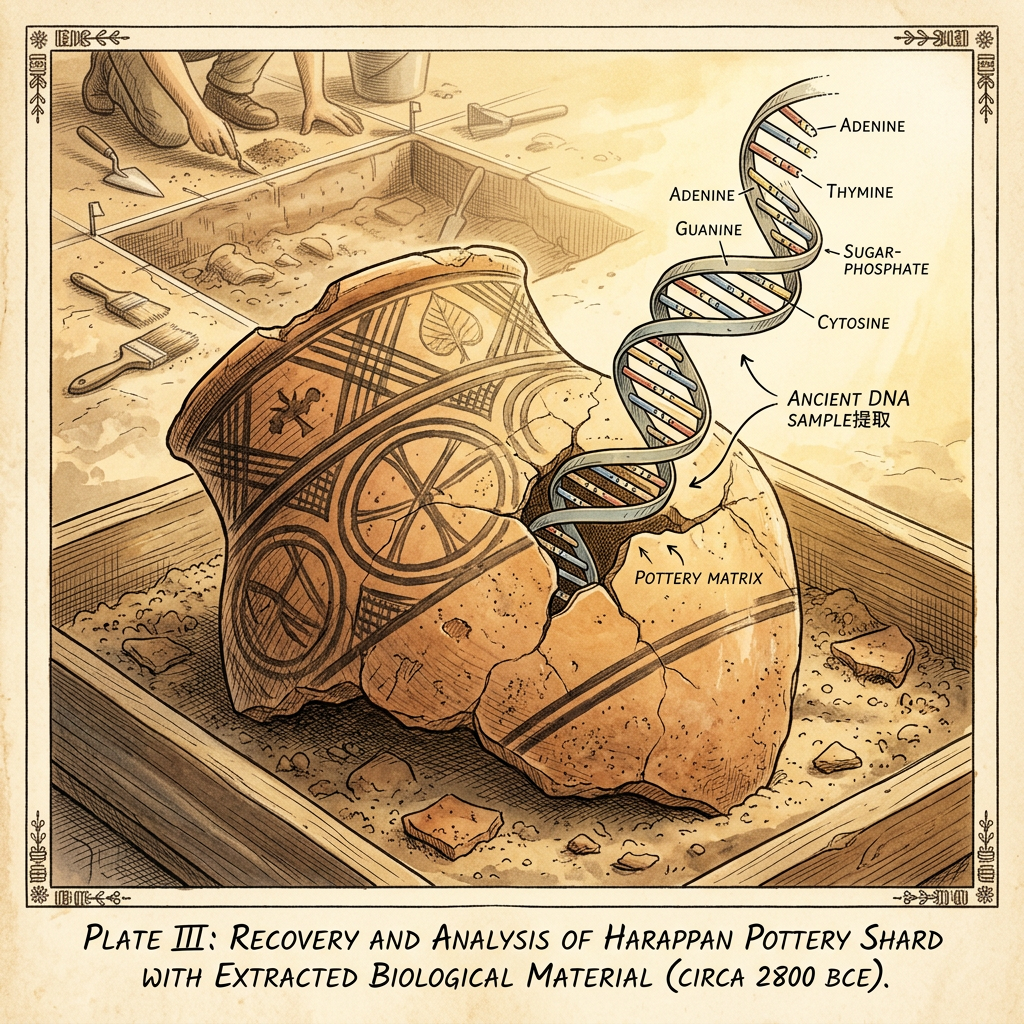
A multi-institutional paleogenomics team has released a major study in Nature Research regarding human remains excavated from Banawali, a key site in the Saraswati-Hakra river system. The ancient DNA (aDNA) analysis of samples dating to 2800 BCE reveals a distinct genetic lineage characterized by specific adaptations to the regional climate. Notably, the study identifies the earliest known genetic selection for drought-resistant metabolic pathways, coinciding with the transition to large-scale cereal farming in the region.
The findings challenge previous models of mass migration by showing a high degree of genetic continuity among the local populations during the transition from the Early to Mature Harappan phases. This research highlights how ancient communities in Northwest India evolved specific biological defenses against fluctuating monsoon patterns. The data also suggests that the Banawali population shared a unique ancestry with contemporary groups in the Aravalli foothills, providing a clearer map of prehistoric social networks.