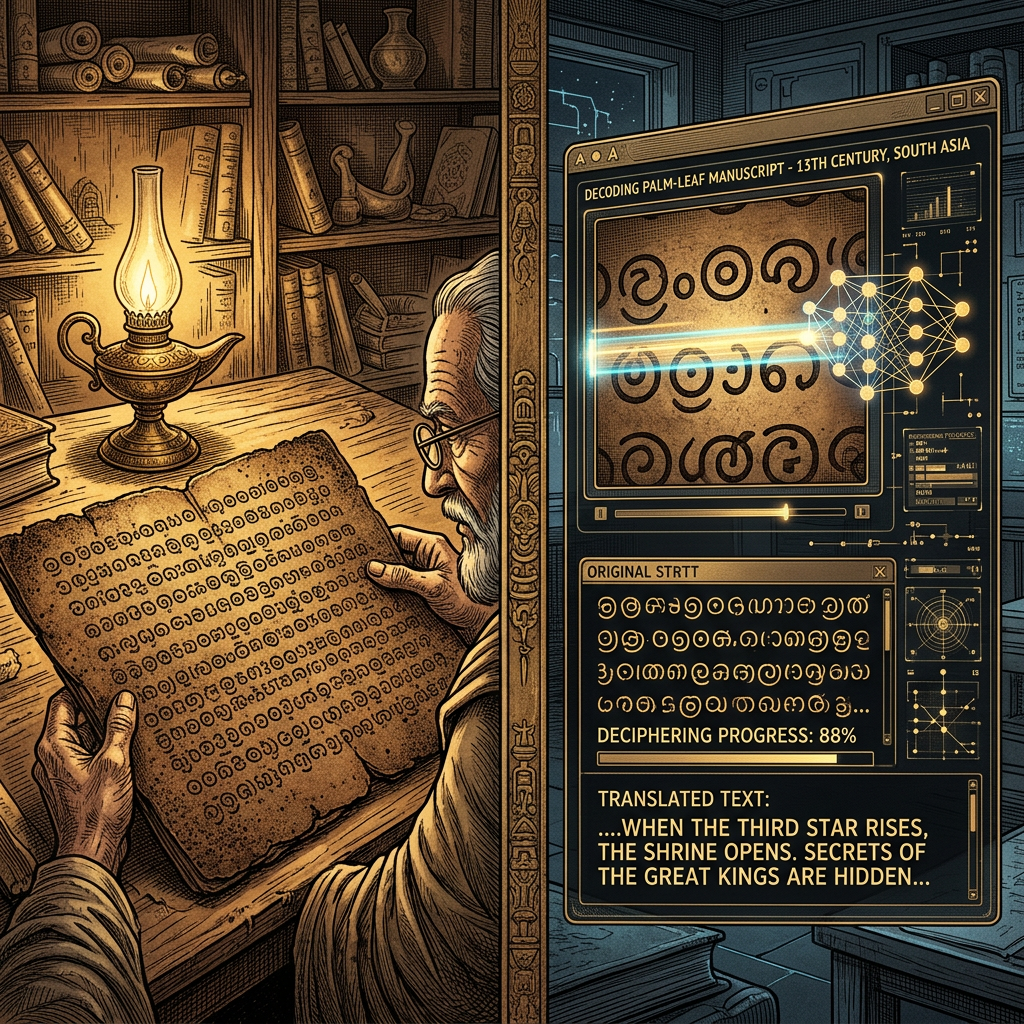
In a landmark achievement for digital paleography, an AI model developed by the Computational Humanities Lab has successfully deciphered a collection of fragmented 9th-century palm-leaf manuscripts. Written in the rare Nandichaya script—a localized variant found in the Nilgiri highlands—the texts contain lost Sanskrit treatises on Vrikshayurveda (the science of plant life). The deciphered sections detail sophisticated observations on the relationship between soil health and "microscopic life-threads," which modern researchers identify as an early conceptualization of the soil microbiome.
The manuscripts outline protocols for enriching agricultural land using specific fermented plant extracts, designed to promote the growth of beneficial organisms. This research suggests that ancient Indian agronomists possessed a highly developed empirical understanding of ecological symbiosis and sustainable farming. The breakthrough is expected to lead to the recovery of more specialized agricultural knowledge from similar undeciphered regional scripts across the Indian peninsula.