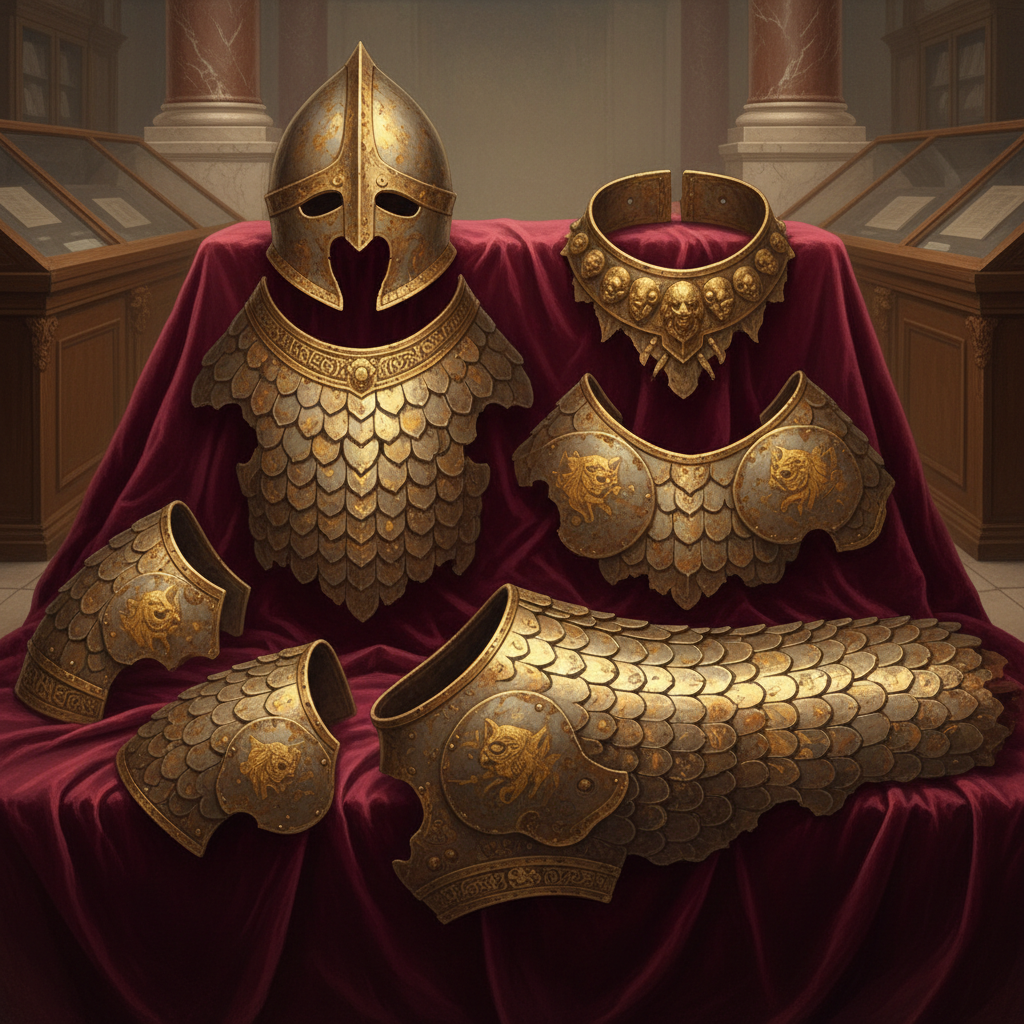
A joint expedition in northern Mongolia has excavated an unlooted 2,500-year-old Scythian royal armory hidden within a permafrost-sealed burial mound. While Scythian kurgans are known for horse regalia, this site has produced the first evidence of specialized gilded iron scale armor designed for large war-dogs. The armor sets are intricately decorated with 'animal style' motifs of griffins and wolves, indicating the high status and tactical importance these animals held in nomadic warfare.
The armory also contained a cache of intact composite bows and leather quivers preserved by the sub-zero temperatures. The discovery of the canine armor, along with skeletal remains of a breed similar to the modern Tibetan Mastiff, suggests that the Scythians utilized armored dogs as shock troops to break infantry lines. This find provides a new dimension to our understanding of the relationship between Iron Age nomads and their domesticated companions.