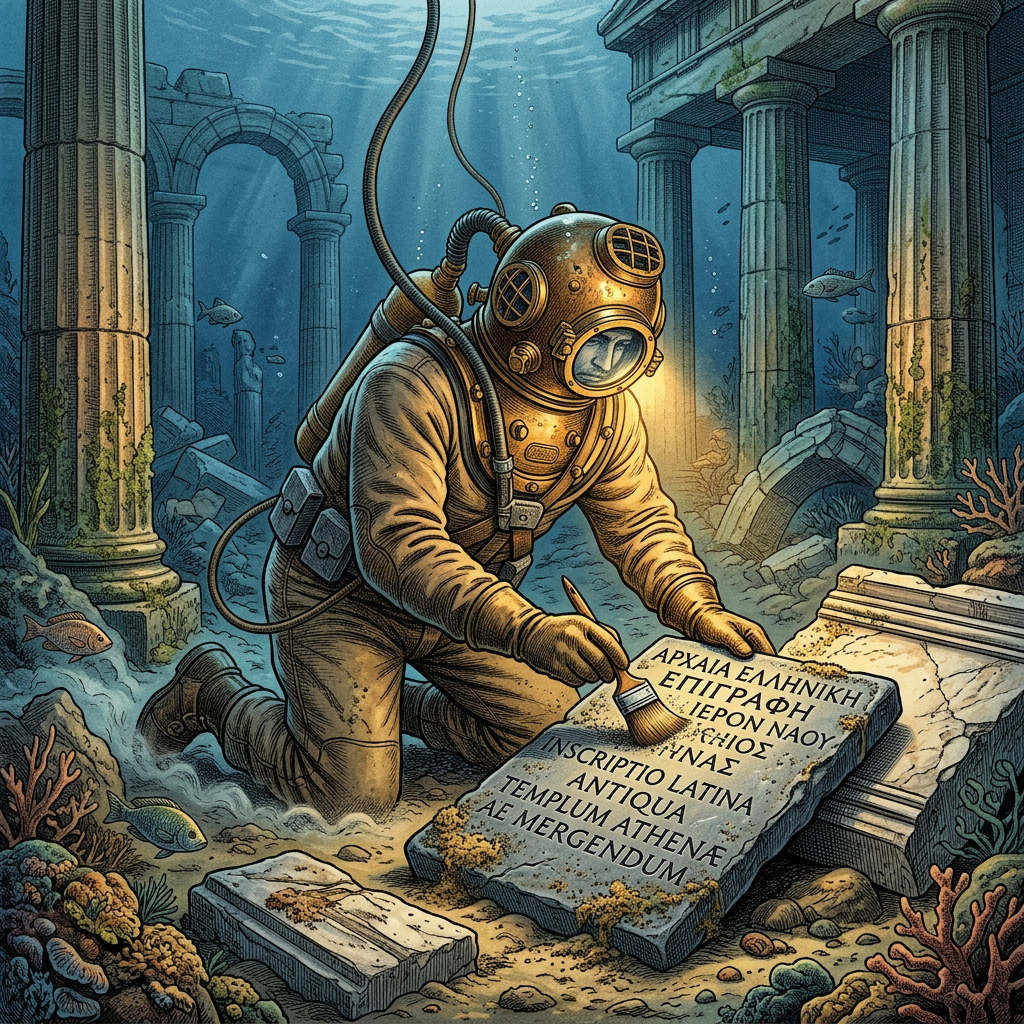
Marine archaeologists exploring the submerged ruins of the Library of Canopus off the Egyptian coast have recovered a series of inscribed lead tablets dating back to the late Ptolemaic period. The tablets, written in a combination of Greek and an early form of Prakrit, detail a profound philosophical inquiry into the 'Metaphysics of the Great Void', illustrating an unprecedented fusion of Stoic physics and early Indian Sunyata (emptiness) theories.
This discovery provides physical evidence of the intellectual exchange that occurred in the cosmopolitan hubs of the ancient Mediterranean. The text posits that the universe is not composed of matter, but of 'resonant absences' that dictate the behavior of the elements. Scholars from the Alexandria Research Center believe these tablets were part of a private collection belonging to a merchant-philosopher who traveled between the Red Sea and the Indian subcontinent.