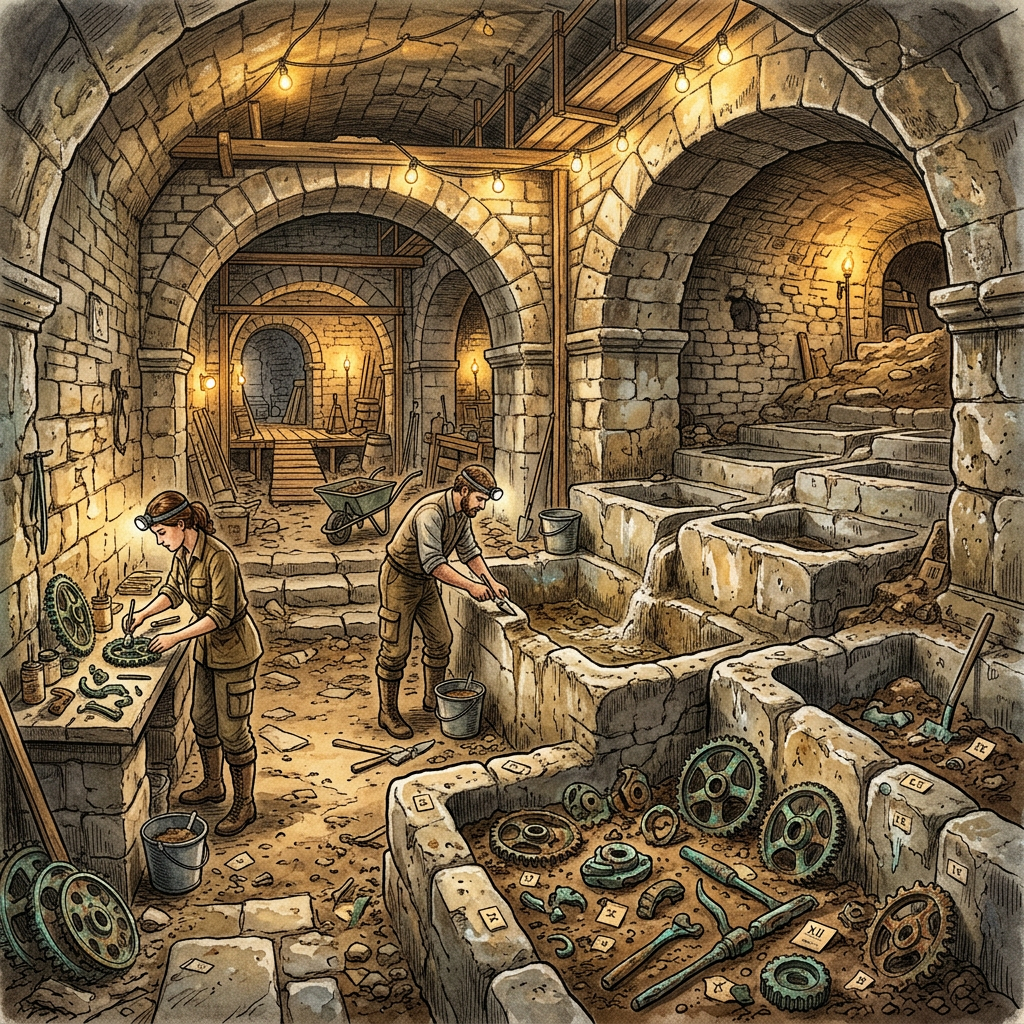
Archaeologists excavating a site near the ancient Roman theater in Lyon have uncovered what appears to be a dedicated horological academy, an unprecedented find that sheds light on the high precision of Roman timekeeping. The structure features a series of interconnected basins and bronze mechanisms designed for clepsydrae (water-clocks), alongside marble pedestals that once held sundials calibrated for different latitudes.
The discovery includes a unique central chamber where students likely studied the mathematics of fluid dynamics and celestial movement. Fragments of inscribed stone tablets found within the ruins detail the maintenance of communal timepieces, suggesting that Roman urban life in Gaul was governed by a far more complex and standardized schedule than previously understood. This academy represents the first physical evidence of institutionalized training for timekeeping specialists in the Western Roman Empire.