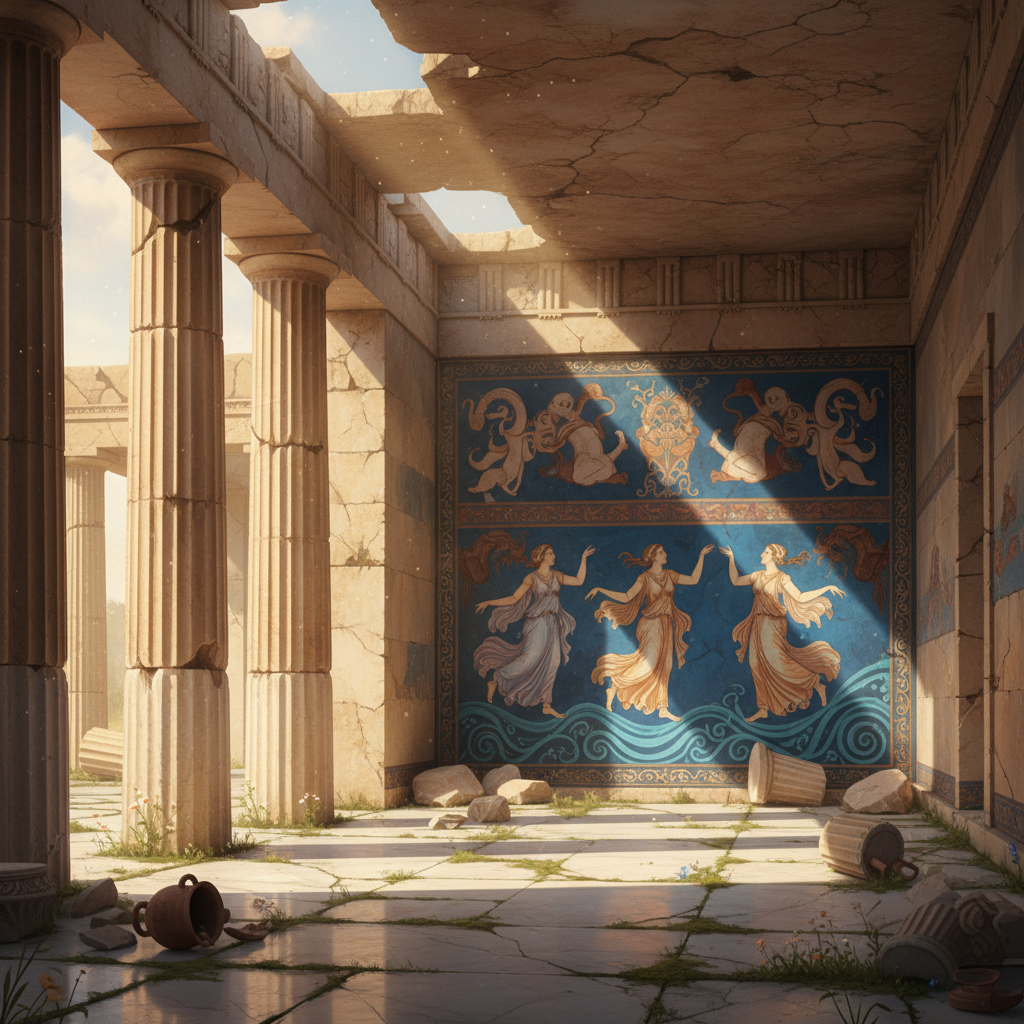
Archaeologists in the remote mountainous region of Aetolia have uncovered a pristine Hellenistic-era temple dedicated to a local cult of water nymphs. The structure, which dates back to the late 4th century BCE, is unique for its interior decoration: a series of murals painted with the rare and expensive pigment azurite. These murals depict various mythological scenes of nymphs emerging from waterfalls and springs, rendered in a striking blue palette that has survived remarkably well due to the site's unique microclimate.
The excavation team also discovered a cache of marble votives in the shape of small amphorae, which worshippers likely used to offer spring water to the deities. The temple is built directly over a natural karst spring, which was channeled into a decorative basin within the naos. This site represents one of the best-preserved examples of a rural sanctuary in Central Greece, offering a direct link between the natural landscape and ancient religious practice.