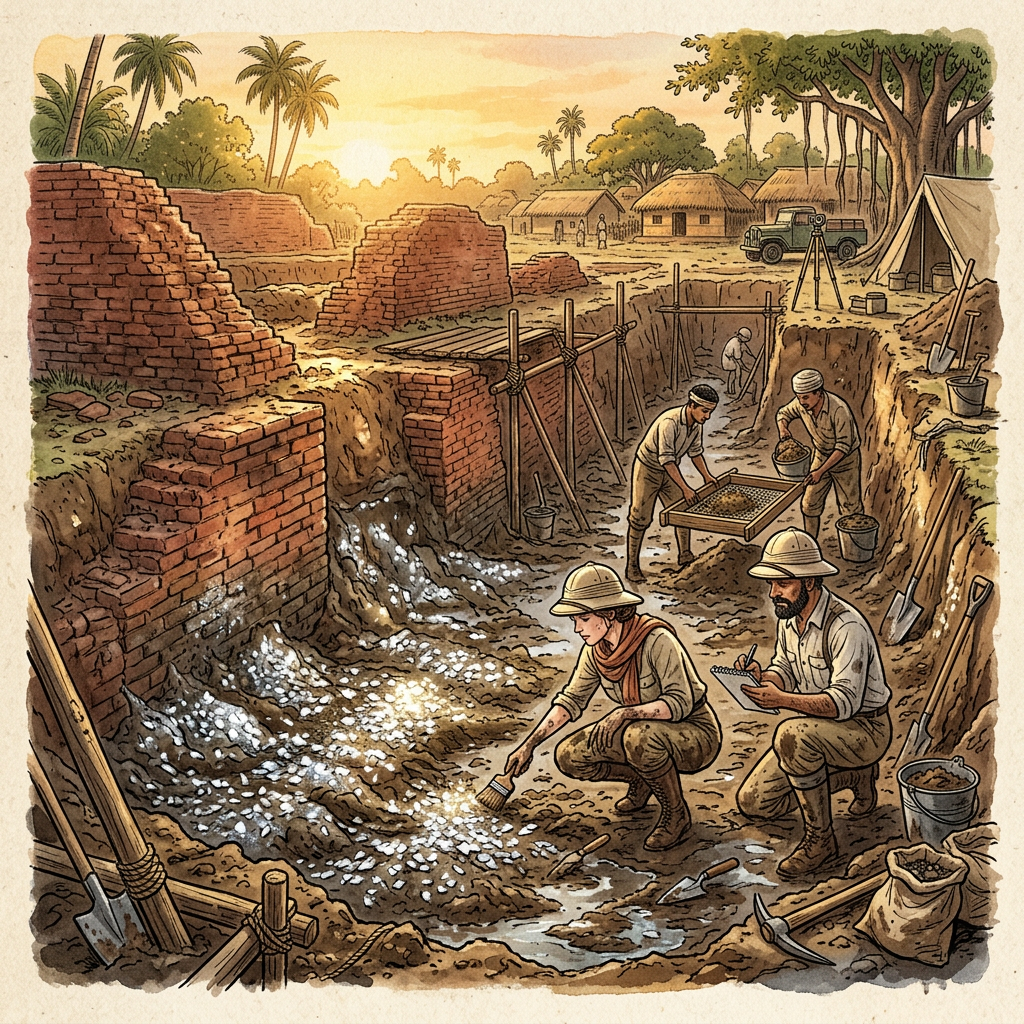
In the Jagjivanpur region of Malda, researchers have unearthed the ruins of a 9th-century Buddhist monastic temple that exhibits a highly unusual engineering technique. The Pala dynasty structure features foundation pits lined with thick sheets of mica, which experts believe served as a sophisticated moisture barrier to protect the temple’s terracotta walls from the high water table of the Bengal plains. This is the first recorded instance of mica being used on such a large scale for structural waterproofing in ancient India.
Excavations have also yielded a collection of high-quality terracotta plaques depicting various Jataka tales, still positioned in their original niches. The temple’s central sanctum houses a basalt pedestal that once supported a massive bronze deity. The discovery of copper-plate grants nearby suggests that the temple was funded by a local guild of silk merchants, highlighting the deep intersection between religious patronage and the region's historical economy.