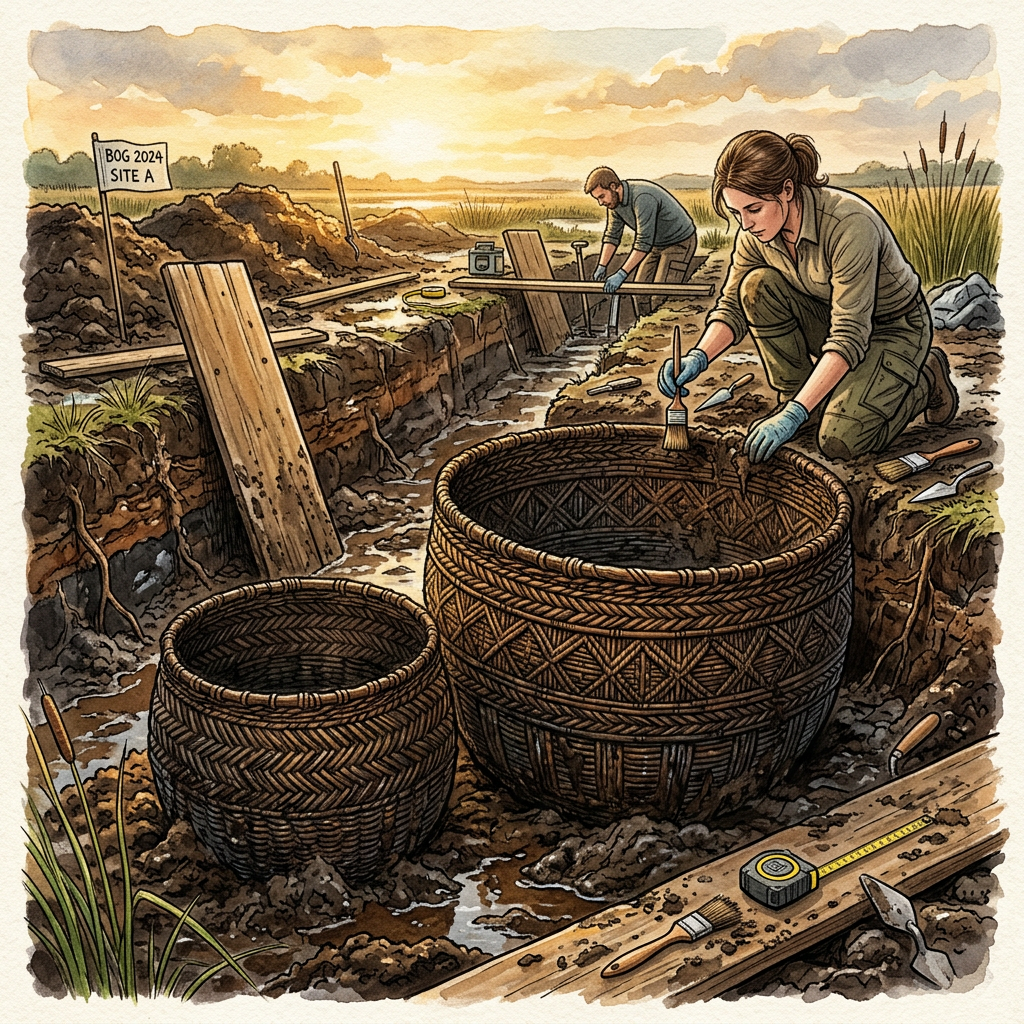
Peat cutters in Jutland have uncovered a series of perfectly preserved hazel-woven ritual baskets dating to the Roman Iron Age. The baskets were discovered submerged in a bog, a location often associated with sacred deposits in ancient Northern Europe. Microscopic analysis of the contents revealed a mixture of charred barley seeds, wild oats, and traces of honey-wax, pointing to a sophisticated seed-blessing ritual performed at the end of winter.
The baskets themselves represent a peak of Iron Age craftsmanship, featuring complex weaving patterns that some researchers believe represent lunar phases. It is hypothesized that these containers were used to transport 'consecrated' grain from a central longhouse to the fields during a multi-day festival celebrating the return of the sun. This find offers a rare glimpse into the portable elements of ancient heritage, moving beyond stone monuments to the organic materials that shaped the daily spiritual lives of Iron Age farmers.