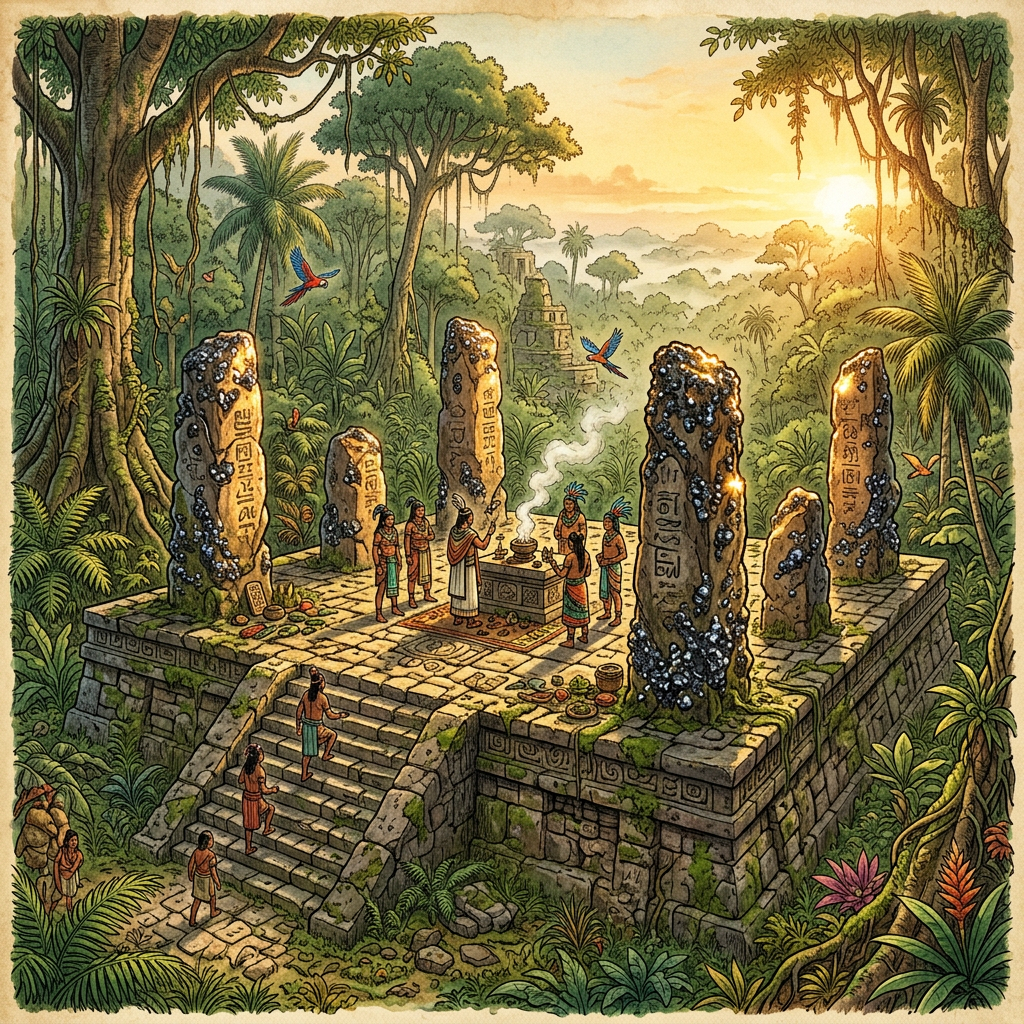
Recent excavations at a Preclassic site in coastal Veracruz have identified a unique ritual platform featuring magnetite-incrusted stone pillars. These pillars, which date back to approximately 1000 BC, were positioned to track the sun's position specifically during the onset of the spring rains. The magnetite surfaces would have caught the early morning light, creating a shimmering visual effect that likely signaled the commencement of 'Rain-Greeting' festivals for the surrounding community.
Archaeologists believe this site served as a regional hub for seasonal gathering and atmospheric observation. The presence of specialized ceramic vessels with aquatic motifs suggests that liquid offerings—potentially a fermented maize beverage—were poured into the platform's base during the rites. This discovery pushes back the timeline for organized, complex solar-based festivals in the Gulf Coast region, illustrating a deep cultural preoccupation with harmonizing human activity with the arrival of life-giving seasonal cycles.