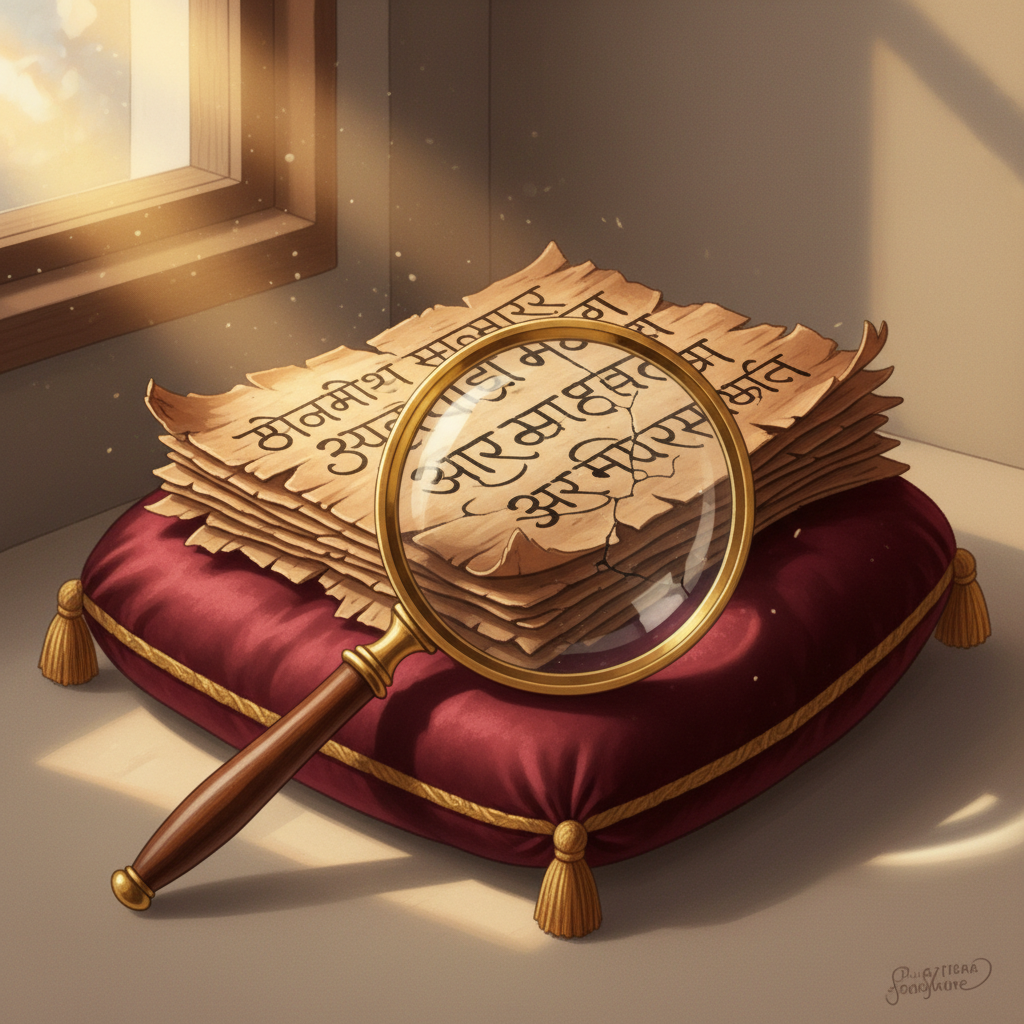
In a private library vault in Ujjain, researchers have discovered a fragmented 11th-century birch-bark manuscript titled 'Yukti-Bhranti-Pradipa' (The Lamp of Logical Error). This revolutionary text challenges the traditional Indian focus on perfect syllogisms by proposing a 'Philosophy of Productive Error'. It argues that certain types of cognitive mistakes are necessary precursors to higher forms of realization, acting as 'stepping stones' that refine the mind's ability to perceive absolute truth through a process of elimination.
The manuscript is attributed to a little-known philosopher of the Paramara era who suggests that human logic is inherently flawed but that these flaws are patterned and predictable. By studying the 'structure of illusion' (Bhranti), a seeker can eventually intuit the contours of the Real. This epistemological shift marks a significant departure from the rigid certainties of the Nyaya school and suggests a more experimental and psychological approach to logic existed in medieval central India.