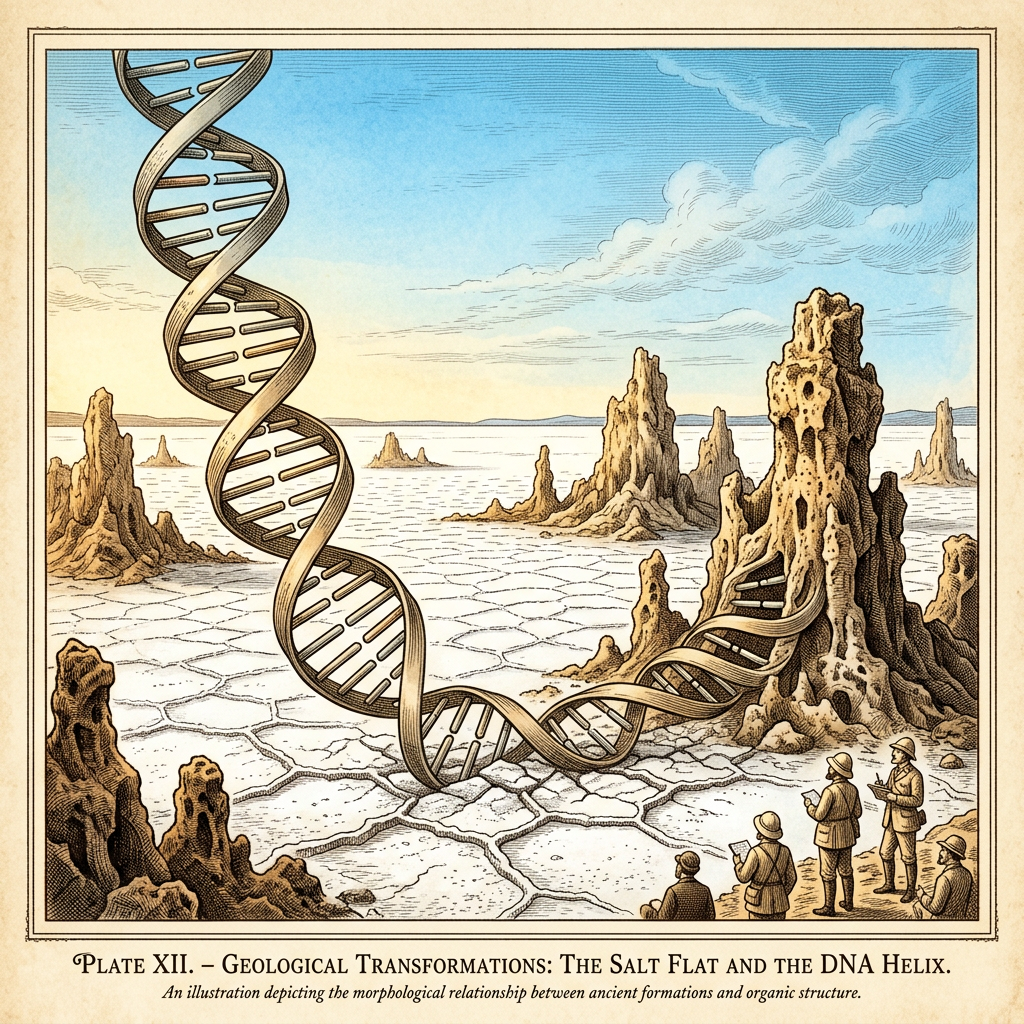
A paleogenomic study published in the Paleogenomics Research Gazette has identified a previously unknown 'ghost' lineage in 13,500-year-old remains found in the Bonneville Basin of North America. The analysis reveals a distinct genetic signature that diverges from all other known Paleo-American populations, characterized by specialized adaptations to high-alkaline tufa spring ecosystems.
The research identifies specific genetic markers linked to the biological filtration of alkaline minerals and the processing of unique riparian flora found in post-glacial lake environments. This finding suggests that early human occupation of the Great Basin was far more genetically diverse than previously assumed, with different groups developing highly localized evolutionary strategies to survive in the rapidly changing salt-lake landscapes of the early Holocene.