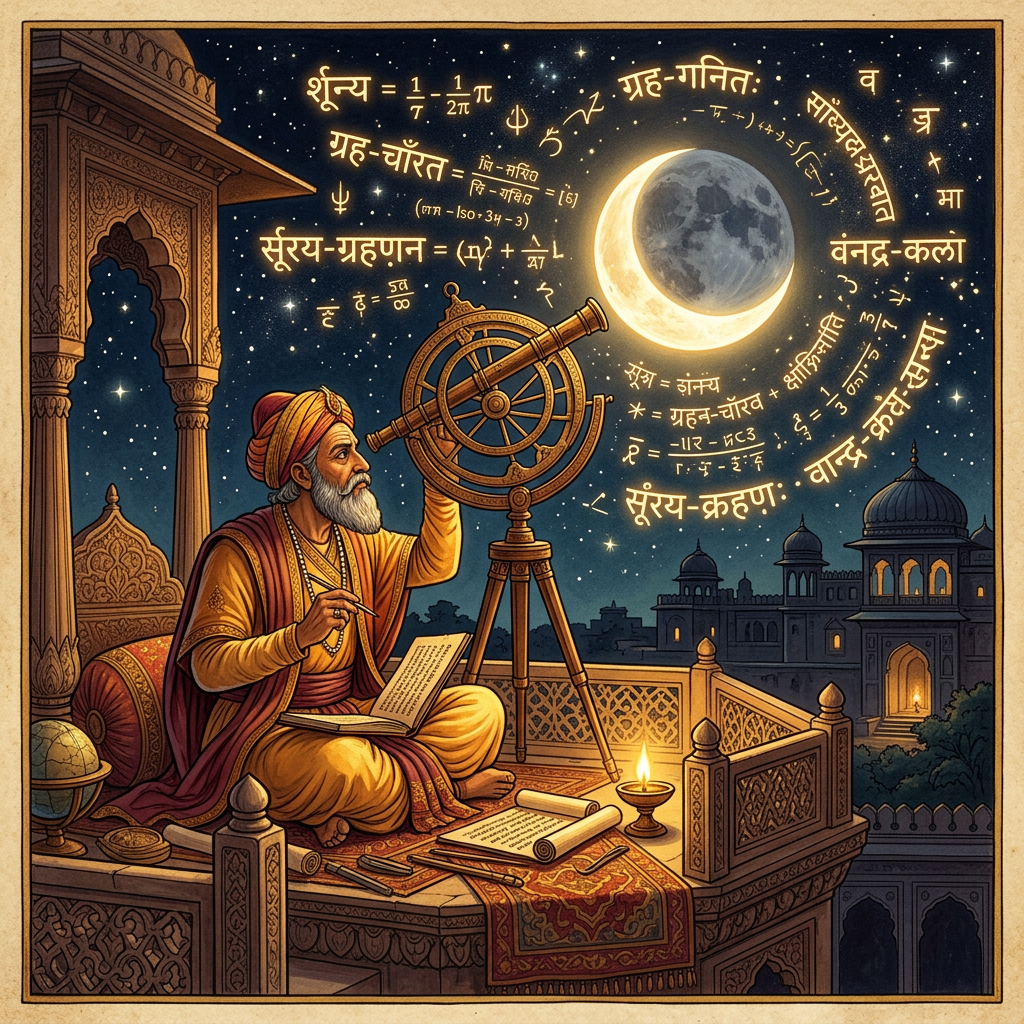
Scholars at the Heritage Physics Journal have published a detailed analysis of the 11th-century Siddhanta-Amrita manuscripts, identifying early Sanskrit models for modeling non-linear lunar surface temperature flux. The study reveals that the text contains iterative mathematical series designed to predict the extreme thermal shifts on the lunar surface during its various phases and eclipses.
By comparing the ancient algorithms to modern thermal data collected by lunar probes, researchers found that the medieval models effectively accounted for atmospheric-free heat absorption and radiation patterns. This discovery provides further evidence of the highly analytical nature of medieval Indian astronomy, which sought to describe the physical and thermodynamic properties of celestial bodies alongside their orbital movements.