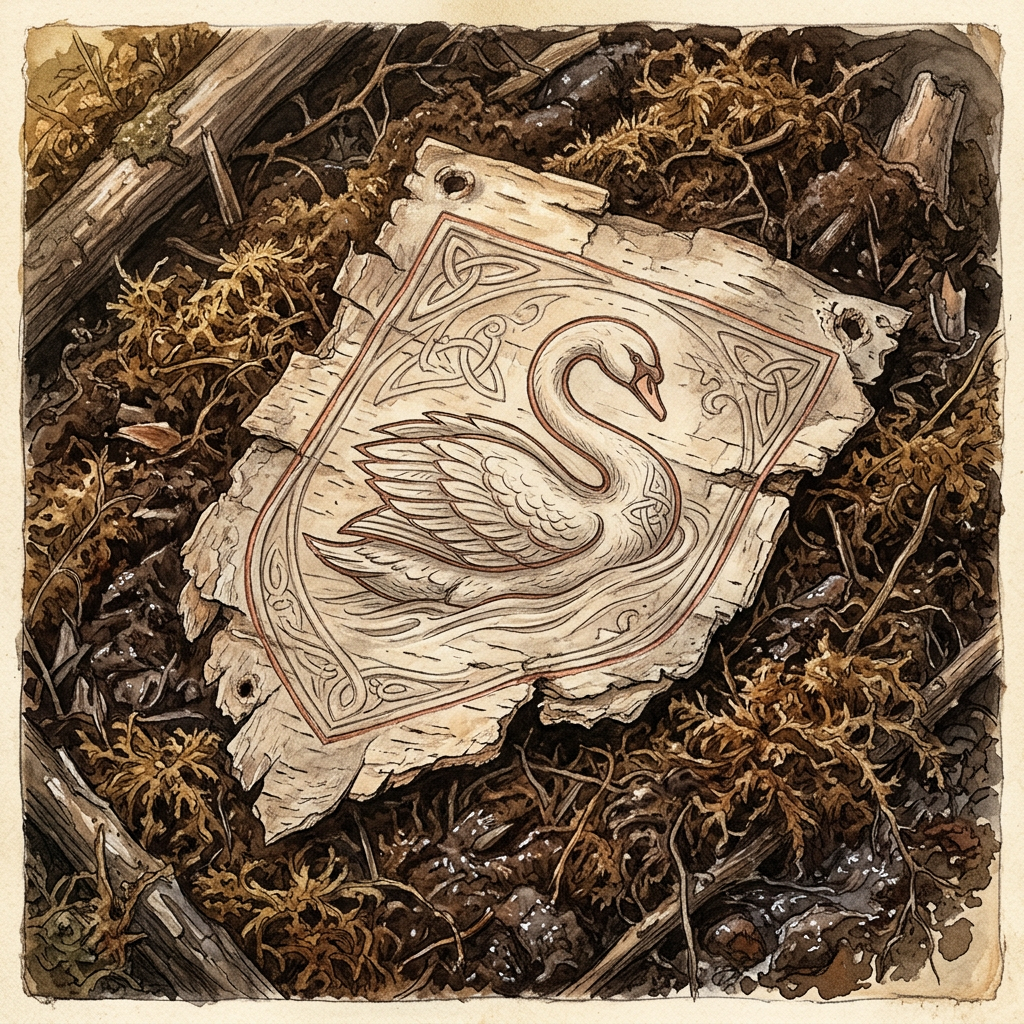
In the Karelia region of the Russian-Finnish border, archaeologists have discovered exceptionally well-preserved birch-bark banners lined with cuprite, a reddish oxide of copper. The banners, found in a low-oxygen peat bog, feature intricate cut-outs of swans and sun-disks. Dating to the 6th century AD, these artifacts are linked to the 'Midsummer-Swan' festival, a seasonal rite celebrating the return of migratory birds and the peak of the solar year.
The cuprite was applied as a fine powder to the edges of the banners to catch the light of the midnight sun, making the swan figures appear to glow with a deep crimson hue. The Nordic Archaeological Journal reports that these banners are the first of their kind ever discovered, providing tangible proof of the complex artistic and ritual traditions of early Finno-Ugric communities during their midsummer gatherings.