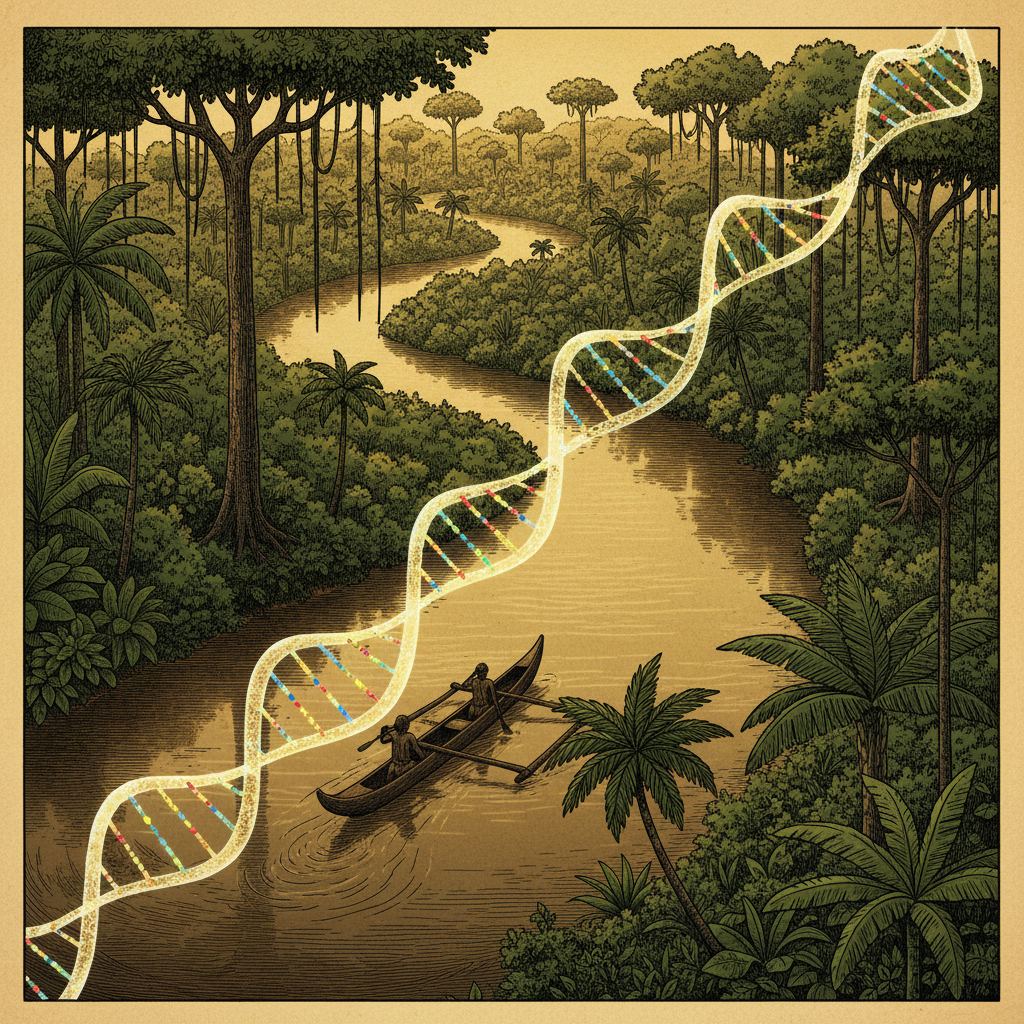
Research appearing in Cell Reports details the genomic analysis of 11,000-year-old skeletal remains discovered in the Sepik River basin of New Guinea. The study identifies the earliest known genetic signature for resilience to endemic tropical fluvial pathogens, particularly those associated with chronic waterborne fevers. The genetic evidence points to a period of intense selective pressure as early hunter-gatherers transitioned to settled life along the river's fertile but hazardous banks.
The analysis also reveals a unique divergent pathway in the immune system's HLA-complex, which appears to have evolved specifically to combat localized parasitic threats. This discovery provides profound insights into the co-evolution of humans and pathogens in tropical ecosystems, illustrating how ancient populations adapted to survive in one of the world's most challenging environments.