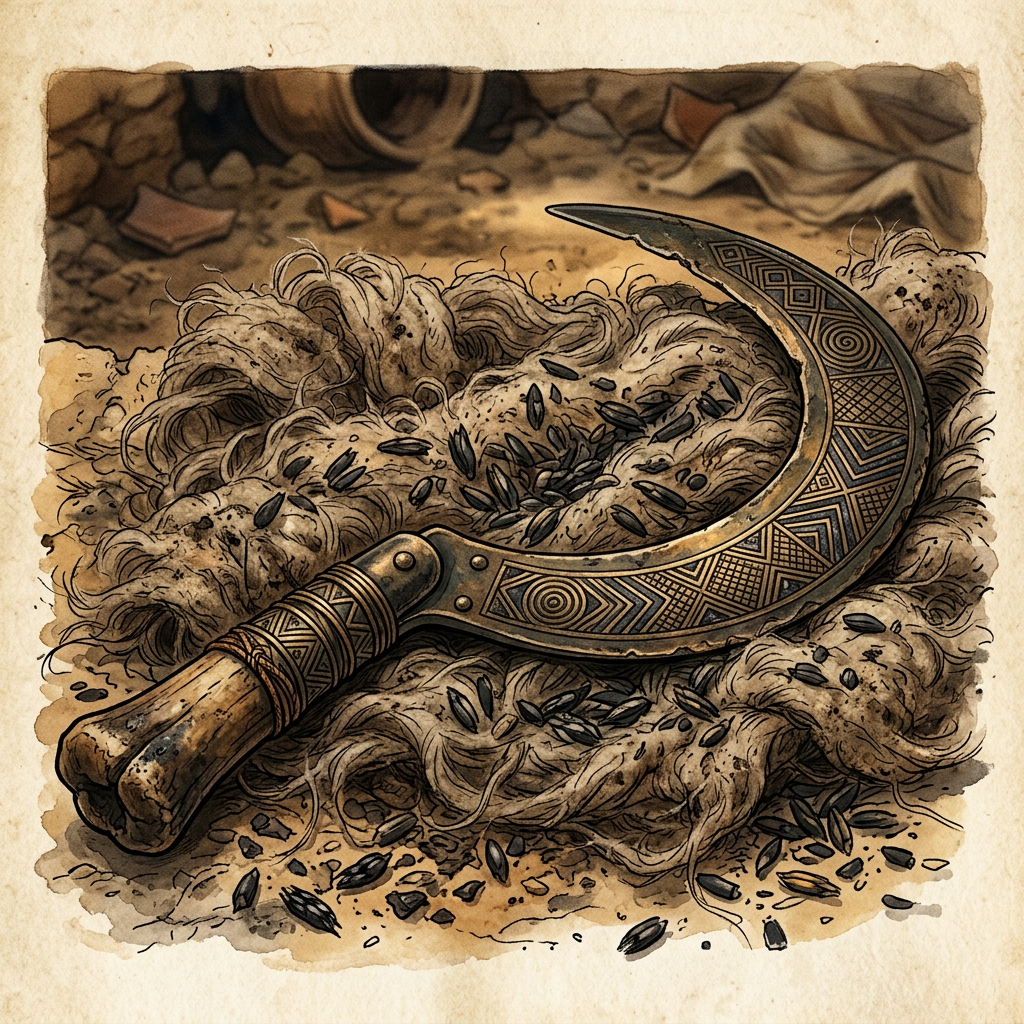
Archaeologists excavating a Bronze Age enclosure in the Scottish Borders have unearthed a cache of stannite-inlaid ceremonial sickles, suggesting that seasonal communal gatherings focused on livestock and agricultural renewal date back over three millennia. The artifacts, decorated with intricate geometric patterns of rare tin-ore, were discovered in a structured deposit alongside charred animal remains, pointing to a specific ritual context for the tools rather than everyday utility.
The find provides the first physical evidence for what researchers are calling the 'Festival of the Spring-Shearing,' a precursor to later Gaelic seasonal festivals. Analysis of the soil surrounding the sickles revealed a high concentration of wool fibers and cereal pollens, indicating that the site served as a hub for early pastoralists to gather, shear their flocks, and offer the first cuttings to the earth in exchange for a prosperous harvest season. The presence of stannite, which would have originated from distant southwestern mines, highlights the high status of these ceremonial items.