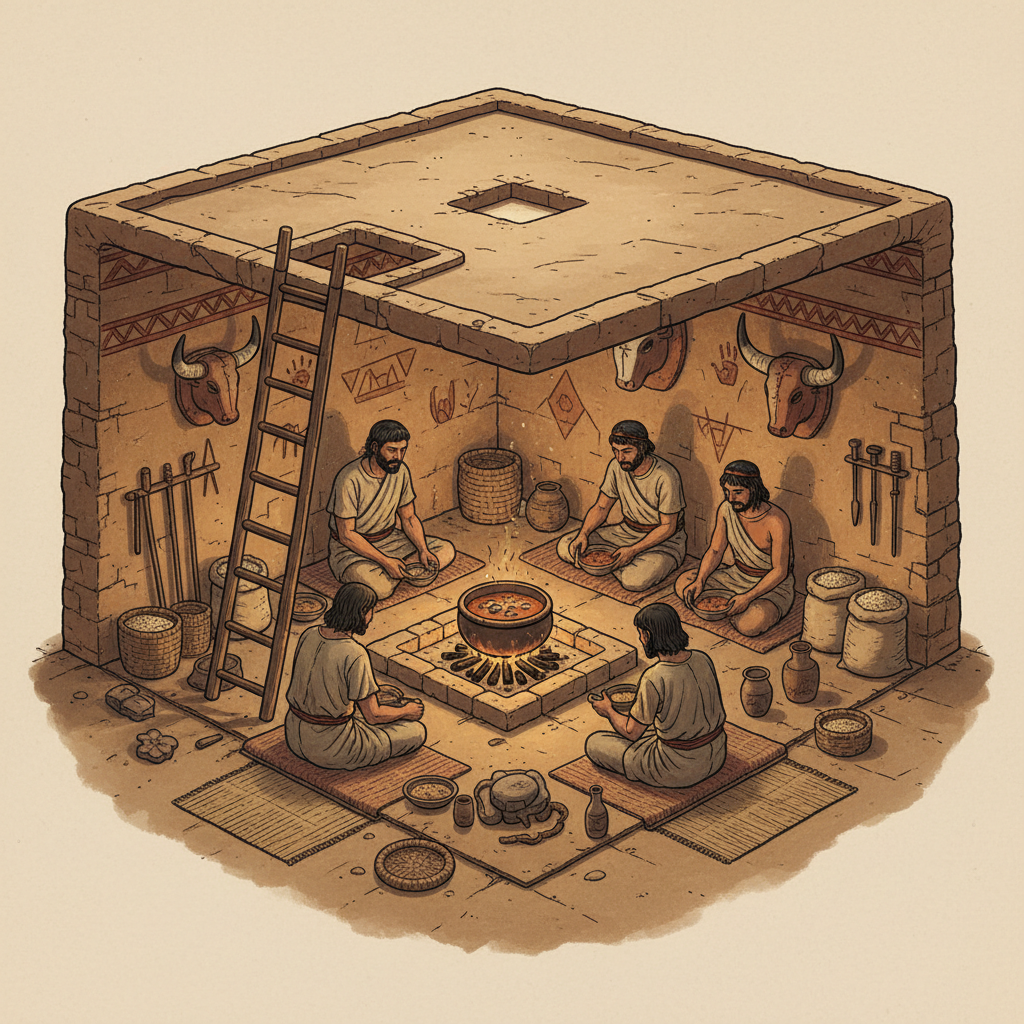
Groundbreaking research published in the Cambridge Archaeological Journal has upended long-standing assumptions about the social structure of Çatalhöyük. By comparing ancient DNA results with burial patterns beneath house floors, scientists have discovered that 'family' in the 8,000-year-old settlement was defined by shared daily life and co-residence rather than biological descent. The study was led by Sabina Cveček of the Field Museum and international colleagues.
The genetic analysis revealed that many individuals buried within the same household lacked close biological ties, suggesting that ancient kinship was a complex social construct built through shared labor, caregiving, and common identity. These findings indicate that the transition to sedentary life in the Neolithic period involved social hierarchies and community bonds that bypassed traditional bloodlines in favor of social proximity.