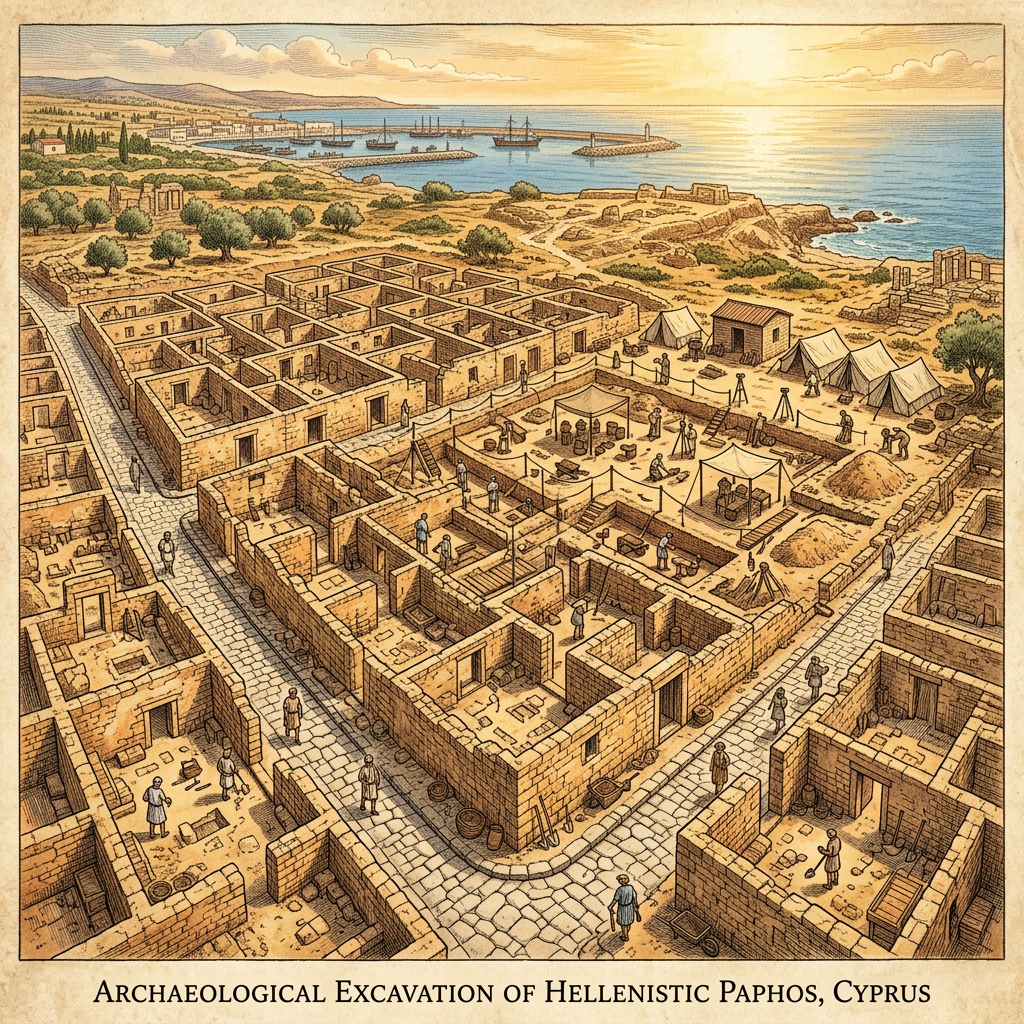
Archaeologists from the University of Warsaw and Jagiellonian University have revealed the earliest urban phases of Nea Paphos, dating back to the late Hellenistic period. The 2025 excavation season, whose findings were detailed in March 2026, uncovered exceptionally well-preserved deposits less than a meter below the surface, surviving centuries of seismic activity and Roman reconstruction.
Key discoveries include a stone-paved street and a residential structure dated to approximately 117 BC, identified via a stamped Rhodian amphora handle bearing the name Aristombrotidas. These findings provide rare evidence of the city’s original layout during its time as a major Ptolemaic administrative and political hub in the Eastern Mediterranean.