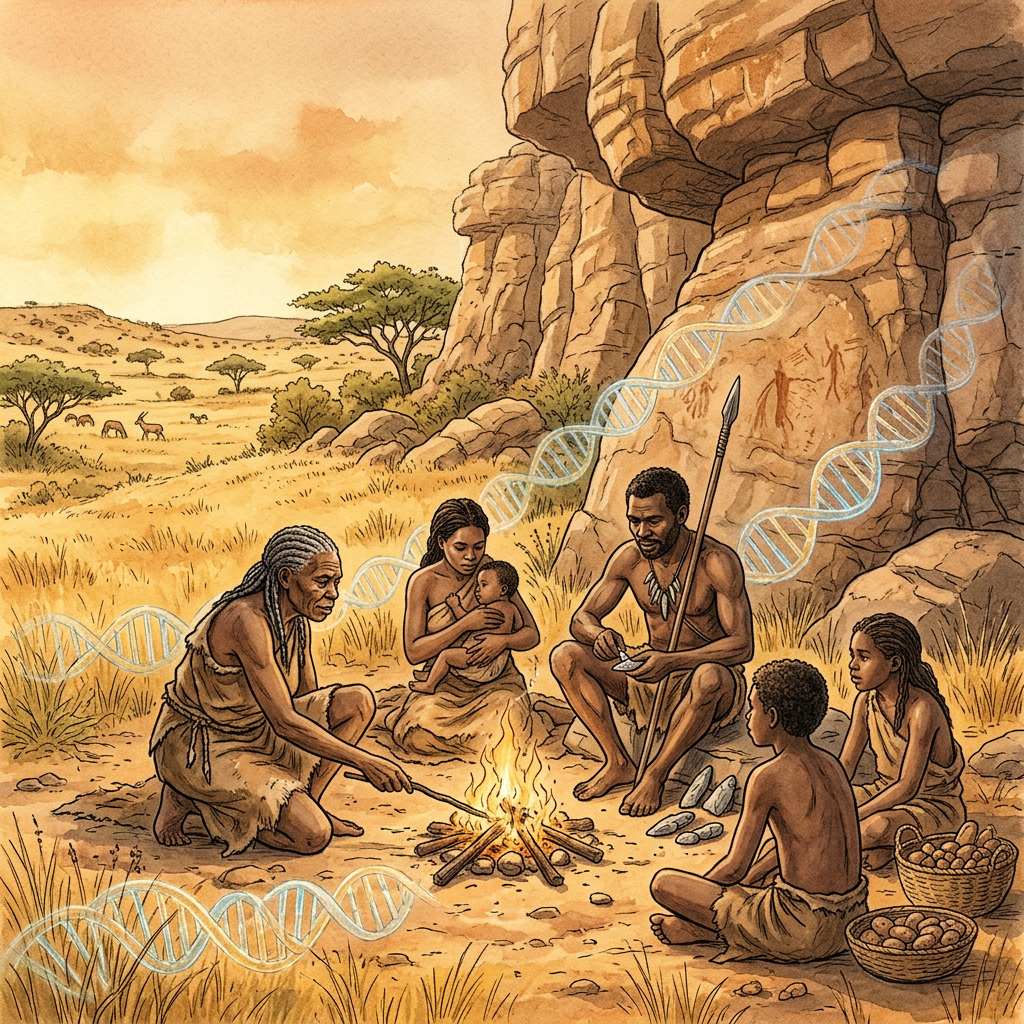
A breakthrough study published in Nature has provided the most detailed genetic map to date of ancient populations in south-central Africa. Researchers from the University of Zambia, in collaboration with international geneticists, successfully sequenced high-resolution DNA from remains discovered at the Kalemba rock shelter. This research identifies a previously unknown lineage of hunter-gatherers who thrived in the region before the arrival of Bantu-speaking farmers.
The findings indicate that Zambia was a critical crossroads for human movement between eastern and southern Africa for millennia. By analyzing the genomes of six individuals dating back 5,000 years, the team discovered that these ancient groups maintained significant genetic diversity through wide-ranging social networks. This discovery challenges the notion of isolated prehistoric communities and highlights the sophisticated mobility of Late Stone Age societies in the Zambezi basin.