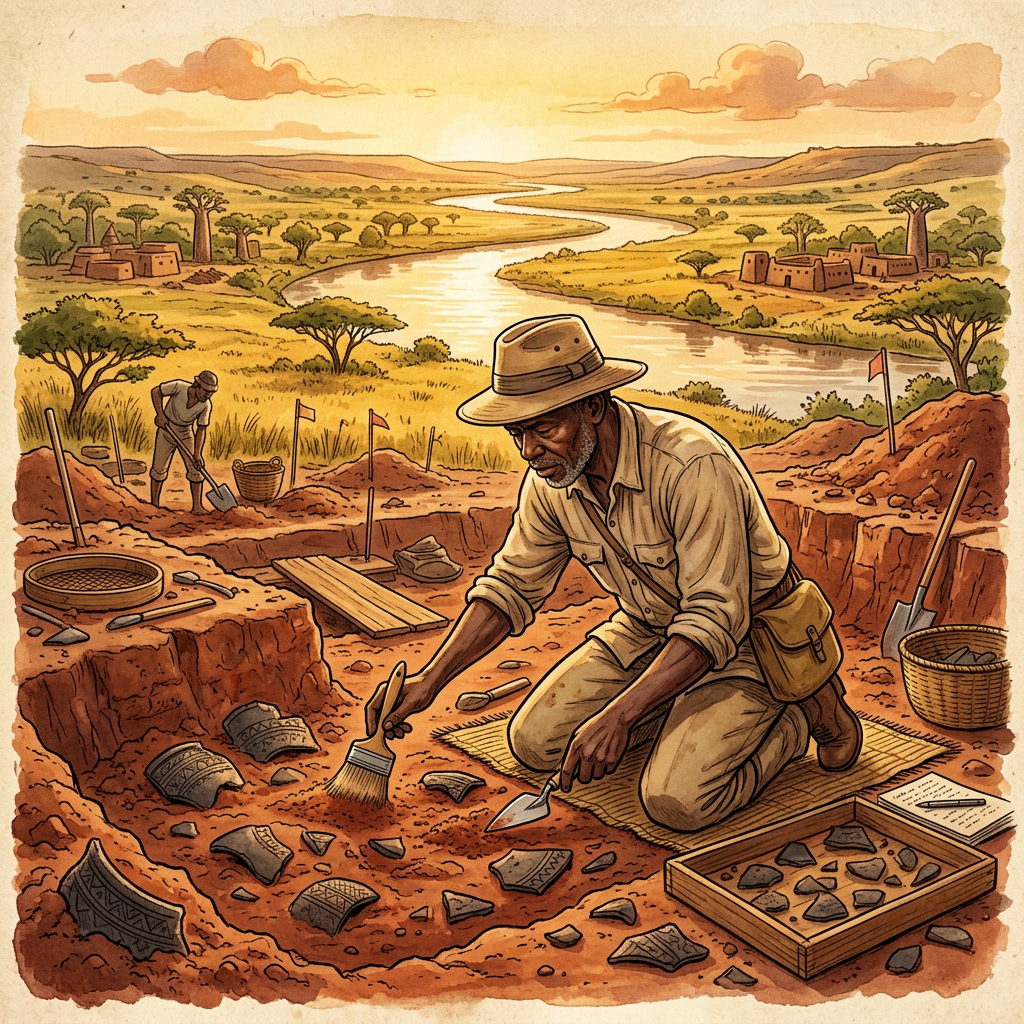
A provocative research paper titled "Niani Redux," published on March 10, 2026, has ignited debate within the international archaeological community regarding the historical site of Niani in northeastern Guinea. The study provides a rigorous re-examination of decades of excavation data, concluding that there are no definitive archaeological arguments to identify the site as the 14th-century capital of the Mali Empire at its peak.
The research, led by a coalition of West African and European scholars, highlights the absence of monumental stone architecture and administrative remains that would typically characterize an imperial capital of such reported splendor. While acknowledging Niani's importance as a significant medieval commercial center, the authors suggest that the search for the true Mansa Musa-era capital must shift to other unexplored regions along the Sankarani River.
This academic shift is expected to influence Guinea's future heritage management strategies and its UNESCO World Heritage tentative list. Local researchers emphasize that even if Niani was not the primary capital, its status as a village-witness to the Manding civilization remains an invaluable part of the region's cultural and ritual landscape.