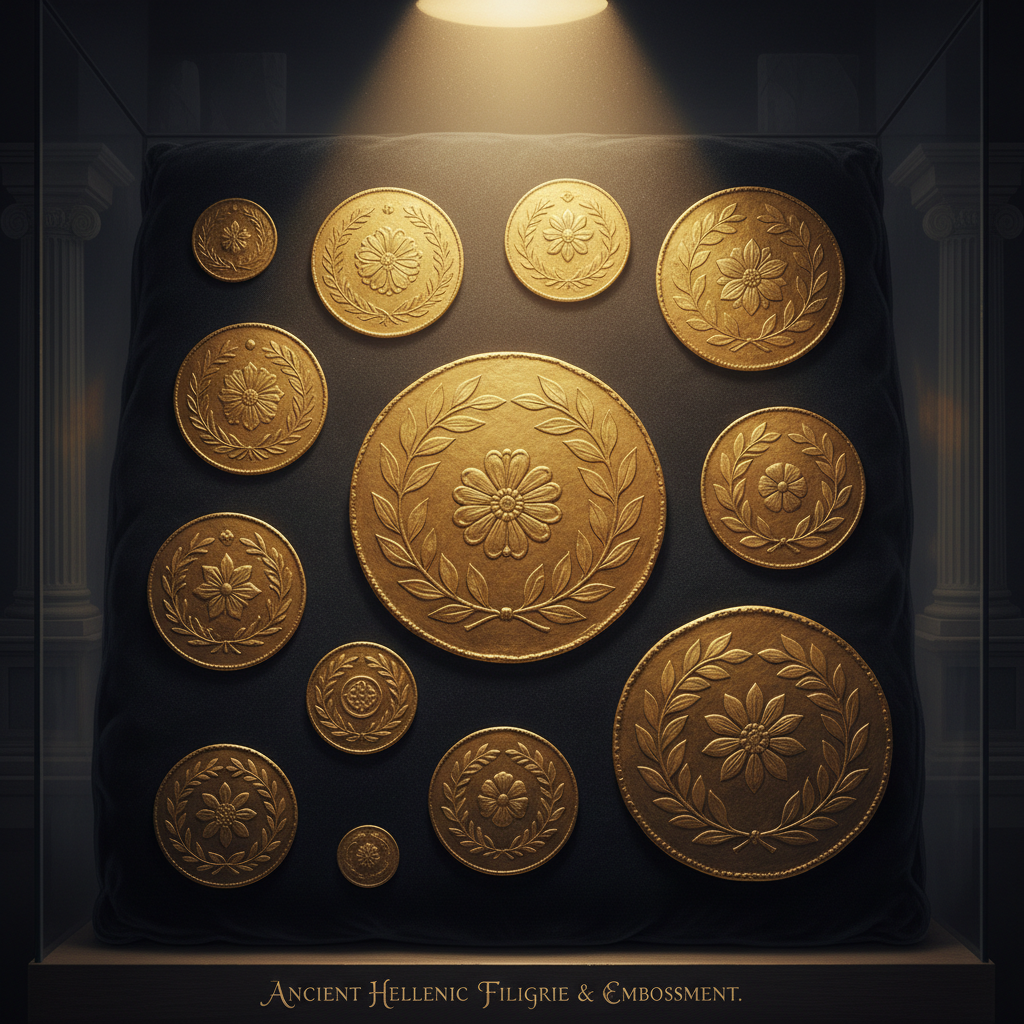
A comprehensive study published in the Journal of Archaeological Science has decoded the sophisticated metallurgy used by Mycenaean artisans over 3,500 years ago. By analyzing 165 gold objects from four tholos tombs near the Bay of Volos in Thessaly—including the undisturbed Kazanaki tomb—researchers identified techniques that allowed smiths to stretch gold with incredible efficiency. Artisans were able to produce nearly 200 paper-thin gold sheets from just 10 grams of metal to decorate funerary garments.
The research highlights that many of these artifacts, such as embossed beads and delicate discs, were created specifically for burial rather than daily use, indicating a highly specialized industry for "afterlife luxury." The study also suggests that while basic items were made locally, the more complex pieces were likely produced in centralized royal workshops, reinforcing the hierarchical nature of Bronze Age Greek society and its link to heroic myths like the Golden Fleece.